
- National
- Bangladesh
- Business
- International
- Sports
- Entertainment
- Politics
- Technology
- Life Style
- Religion
- Opinion
- FIFA World Cup 2026
Monday, 20 July 2026

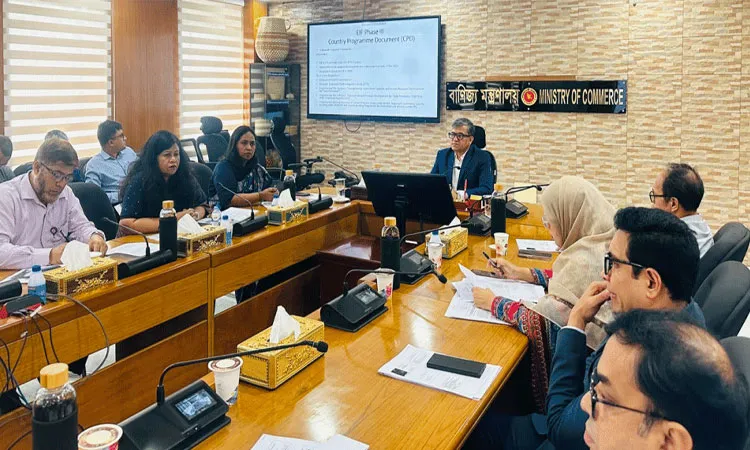
Bangladesh is launching a new five-year action plan to boost trade capacity, improve the investment climate, and increase global competitiveness ahead of its graduation from Least Developed Country (LDC) status.
The initiative falls under the third phase of the Enhanced Integrated Framework (EIF), a World Trade Organization (WTO) program designed to help LDCs build their trade capacity. The five-year program is expected to commence this year and is backed by financial assistance from development partners, including the United Kingdom, the European Union and Sweden,.
Announcing the plan on Sunday in Dhaka, Commerce Secretary Ataur Rahman Khan noted that Bangladesh's economy is navigating a critical transition. He highlighted the urgent need to overcome non-tariff barriers, meet international compliance standards, and improve the domestic investment environment.
Khan emphasized that simply drafting policies and research reports is no longer sufficient; effective, field-level implementation is the key to success. “The benefits of these reforms should reach ministries, departments, and relevant agencies down to the field level,” he said, urging stronger inter-ministerial coordination and sweeping legal and regulatory reforms.
EIF Consultant Md Hafizur Rahman explained that 12 priority activities were carefully selected from 52 initial project ideas. These activities align with Bangladesh's existing export and industrial policies and focus heavily on export capacity development, institutional training, and integrating artificial intelligence (AI) into trade operations,.
Officials remain optimistic that the successful execution of this third EIF phase will ensure Bangladesh maintains its competitive edge in international markets and successfully attracts new investments in its post-LDC era.
