- National
- Bangladesh
- Business
- International
- Sports
- Entertainment
- Politics
- Technology
- Life Style
- Religion
- Opinion
- FIFA World Cup 2026
Wednesday, 22 July 2026

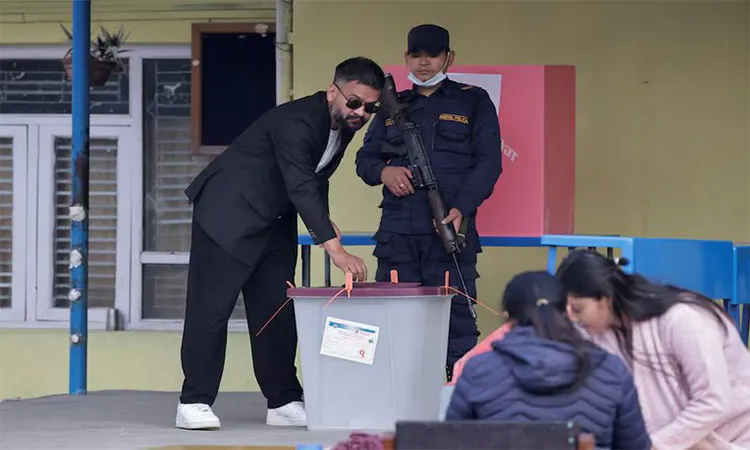
After Nepal’s historic youth-led uprising last September, which killed at least 77 people and forced then prime minister K.P. Sharma Oli to resign, a brief social media post captured the public mood.
“Dear Gen Z, the resignation of your killer has come,” wrote Balendra Shah, widely known as Balen. “Now your generation must lead the country. Be prepared.”
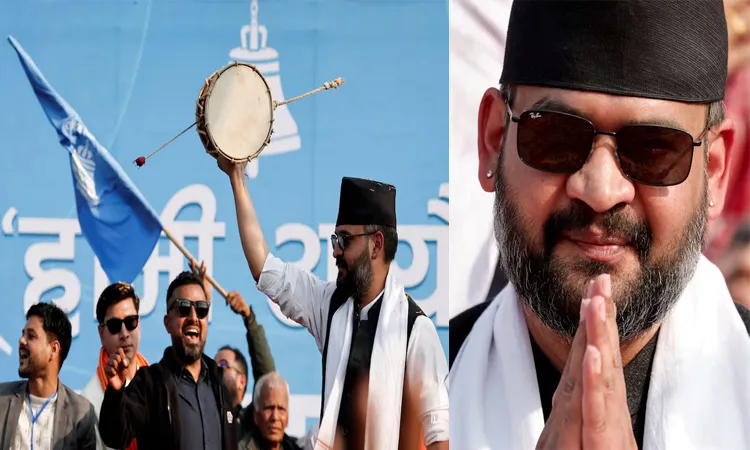
Five months later, the 35-year-old rapper-turned-politician is leading the race to become Nepal’s next prime minister ahead of the March 5 general election. Shah rose to national prominence after winning the mayoral election in Kathmandu in 2022 and is now challenging Nepal’s long-entrenched political elite.
Nepal has no reliable opinion polls, but several political analysts and local media outlets describe Shah as the most popular prime ministerial contender. His appeal has spread well beyond the capital.
“Buses heading to Kathmandu now carry stickers saying, ‘Going to Balen’s city,’” said Bipin Adhikari, a constitutional law expert at Kathmandu University.
If elected, Shah’s rise would mark a major political shift in the Himalayan nation, long dominated by a handful of established parties. These include Oli’s Communist Party of Nepal (Unified Marxist–Leninist), often viewed as closer to China, and the centrist Nepali Congress, traditionally seen as aligned with India.
Shah represents the Rastriya Swatantra Party (RSP), a centrist newcomer that promises “balanced foreign relations” with both neighbours.
Much of Shah’s popularity stems from his tenure as Kathmandu mayor, where he focused on waste management, urban order and service delivery. However, rights groups, including Human Rights Watch, have criticised him for alleged heavy-handed actions against street vendors and landless people.
Shah resigned as mayor in January to contest the election. He declined interview requests and questions sent by Reuters. Unlike many senior politicians, he avoids mainstream media and relies heavily on social platforms, where he has more than 3.5 million followers, mainly young voters.
His campaign images—often featuring dark sunglasses and a salt-and-pepper beard—are widely shared online.
“His strength is his connection with the youth,” said political analyst Puranjan Acharya. “But governing the country will be far more difficult than winning popularity online.”
Born to an Ayurvedic practitioner father and a homemaker mother, Shah developed an early interest in poetry that later evolved into rap music. Influenced by American artists such as Tupac Shakur and 50 Cent, his songs sharply criticised Nepal’s ruling class.
One of his best-known tracks, Balidan (Sacrifice), released in 2019, has drawn millions of views for lyrics that demand free speech and accountability in a country where around 20% of the population lives in poverty.
Shah formally entered politics as an independent candidate in the Kathmandu mayoral race, campaigning on the slogan “Time for change.” He won by a landslide.
Last December, Shah joined the RSP led by former television presenter Rabi Lamichhane, becoming its prime ministerial candidate. The party manifesto promises 1.2 million jobs, reduced labour migration, universal healthcare insurance and a sharp rise in per capita income within five years.
Analysts caution that fulfilling such pledges will be difficult without strong institutional support. “He will need a capable team and expert backing,” Acharya said. “Without reforms to a corruption-ridden system, he risks being worn down—like wood eaten by termites.”