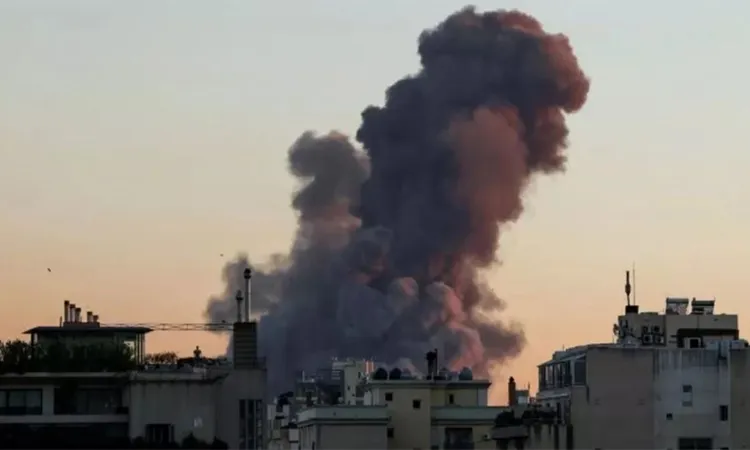
Tensions in Lebanon have risen again less than a month after the Israel-Hezbollah ceasefire agreement. Israel carried out airstrikes in southern Beirut on Wednesday (May 6), increasing concerns about the fragile peace process in the Middle East and the future of ongoing US-Iran negotiations.
In a joint statement, Israeli Prime Minister Benjamin Netanyahu and Defense Minister Israel Katz said the attack targeted a commander from Hezbollah’s elite Radwan unit. Israeli media reported that the commander was killed. However, neither Hezbollah nor the Lebanese army has officially confirmed the claim.
Diplomatic communication between Lebanon and Israel continues through US mediation, but Lebanese Prime Minister Nawaf Salam said high-level talks are unlikely at this stage. He stated that Lebanon is seeking long-term stability rather than a temporary solution. According to Beirut, a clear timetable for the withdrawal of Israeli troops from southern Lebanon is necessary for lasting peace.
Salam also announced plans to bring all weapons in the country under state control.
Lebanese President Joseph Aoun said conditions for any meeting with Benjamin Netanyahu would not exist unless Israeli attacks stop.
Recently, US President Donald Trump announced an extension of the ceasefire and expressed hope for a broader peace agreement within this year. However, the latest strike in Beirut has increased uncertainty over that possibility.
Hezbollah has long opposed direct contact with Israel, a position that has deepened divisions within Lebanese politics. Meanwhile, Israel says it has created a security zone extending about 10 kilometers inside Lebanese territory to protect its northern region.
The latest strike near central Beirut has renewed fears of a wider conflict in the Middle East.