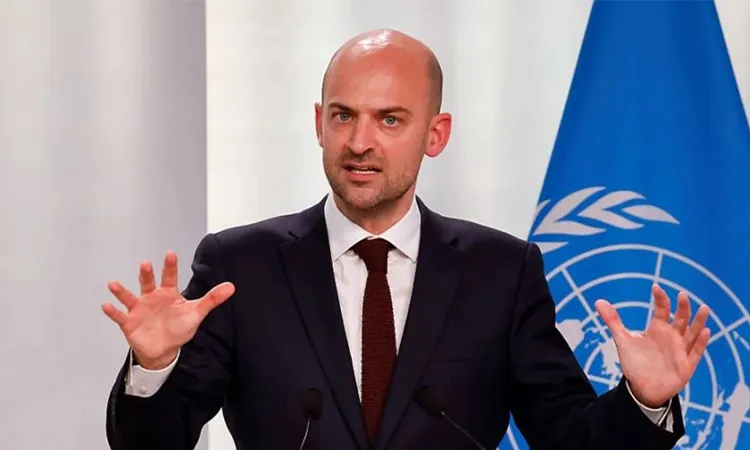
France has called on Iran to demonstrate significant flexibility in potential talks with the United States to resolve the escalating Middle East crisis. French Foreign Minister Jean-Noël Barrot warned the UN Security Council that unless Tehran abandons its hardline stance, stabilizing the region will be nearly impossible.
Barrot emphasized that "major concessions" are now the primary condition for restoring regional security. He urged Iran to pursue "peaceful coexistence" with its neighbors, suggesting that a radical shift in Tehran’s regional and military policies is essential.
Analysts view France's statement as a strategic move to ramp up international pressure. While diplomatic efforts have largely stalled, the risk of a broader conflict—driven by direct Iran-Israel tensions and the war in Lebanon—continues to grow.
France is specifically pushing for flexibility regarding Iran’s nuclear program and regional military activities to facilitate a sustainable agreement with Washington.
The French position suggests a coordinated Western effort to hold Iran accountable for regional de-escalation. However, the path forward remains uncertain. Iran has reportedly communicated its "red lines" to the U.S. via Pakistan, signaling that it may not yield easily to European demands.
As the peace process remains in limbo, the international community is watching closely to see if Paris's blunt diplomacy will force a shift in Tehran’s next move.