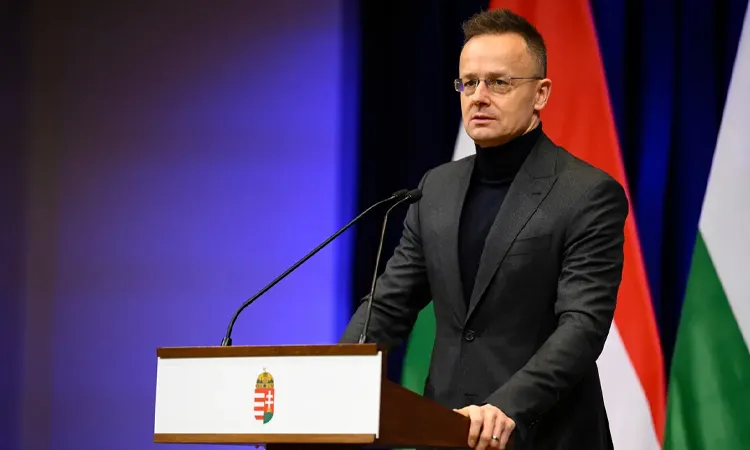
Hungary will block a planned 90-billion-euro European Union loan to Ukraine until the flow of Russian oil through the Druzhba pipeline is restored, Hungary’s foreign minister said on Friday.
Russian oil shipments to Hungary and Slovakia have been disrupted since 27 January, after Ukrainian officials said a Russian drone attack damaged the pipeline inside Ukrainian territory. The Druzhba pipeline transports Russian crude to several Central European countries.

Hungary and Slovakia—both granted temporary exemptions from an EU ban on Russian oil imports—have accused Ukraine of delaying the resumption of supplies, though no evidence has been publicly presented.
In a video posted on social media, Hungarian Foreign Minister Péter Szijjártó accused Kyiv of “blackmailing” Hungary by failing to restore oil transit. He said Budapest would block the EU’s interest-free loan package, approved in December, which aims to support Ukraine’s military and economic needs over the next two years.
“We will not give in to this blackmail,” Szijjártó said. “As long as Ukraine blocks the resumption of oil supplies to Hungary, Hungary will block EU decisions that are important and favourable for Ukraine.”
Hungary’s move comes days after it suspended diesel shipments to Ukraine and shortly before the fourth anniversary of Russia’s full-scale invasion, launched on 24 February 2022.
Since the war began, most European countries have sharply reduced or stopped imports of Russian energy. Hungary, however—an EU and NATO member—has continued and in some cases increased its reliance on Russian oil and gas.
Prime Minister Viktor Orbán has repeatedly argued that Russian energy supplies are vital for Hungary’s economy and that switching sources would cause severe economic damage, a claim disputed by some analysts.
Orbán is widely viewed as Moscow’s strongest ally within the EU and has consistently opposed sanctions on Russia, particularly measures targeting its energy sector. His government has frequently threatened to veto EU assistance to Ukraine.
Not all of the EU’s 27 member states backed the 90-billion-euro loan plan. Hungary, Slovakia, and the Czech Republic initially opposed it, but an agreement was reached under which they did not block the package and were offered protection from potential financial risks.