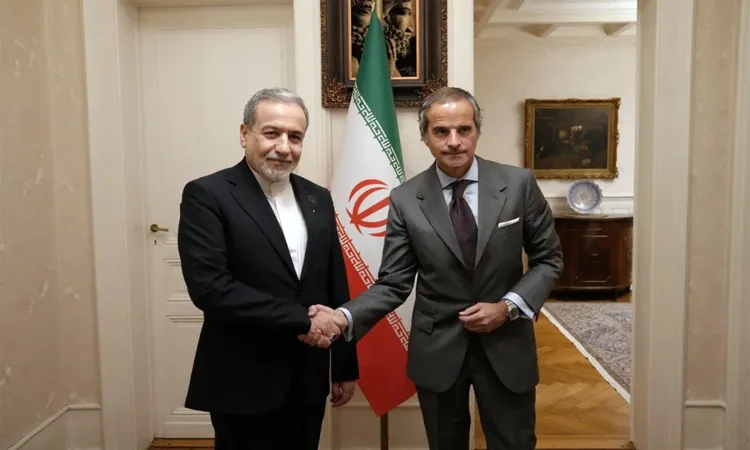
Iran’s top diplomat met the head of the UN nuclear watchdog on Monday, ahead of a second round of talks with the United States on Tehran’s nuclear programme.
Iranian Foreign Minister Abbas Araghchi met Rafael Grossi, director-general of the International Atomic Energy Agency (IAEA), in Geneva. Araghchi said he would also meet Badr al-Busaidi, as Oman is hosting the US-Iran talks scheduled for Tuesday.
“I am in Geneva with real ideas to reach a fair and equitable deal,” Araghchi wrote on X. “What is not on the table is submission to threats.”
As diplomacy continued, tensions remained high in the region. After US President Donald Trump ordered another aircraft carrier to the Middle East, Iran launched a new naval drill, state television reported. The exercise, conducted by the Islamic Revolutionary Guard Corps, is aimed at testing intelligence and operational readiness in the Strait of Hormuz, the Persian Gulf and the Gulf of Oman—routes that carry about 20% of the world’s oil.
Maritime security firm EOS Risk Group said sailors were warned by radio that a live-fire drill could take place in Iranian waters of the Strait of Hormuz on Tuesday. Iranian state media did not confirm live-fire activity.
This follows earlier warnings in recent weeks. In late January, the US Central Command cautioned Iran against threatening US warships or commercial traffic, while acknowledging Tehran’s right to operate in international waters.
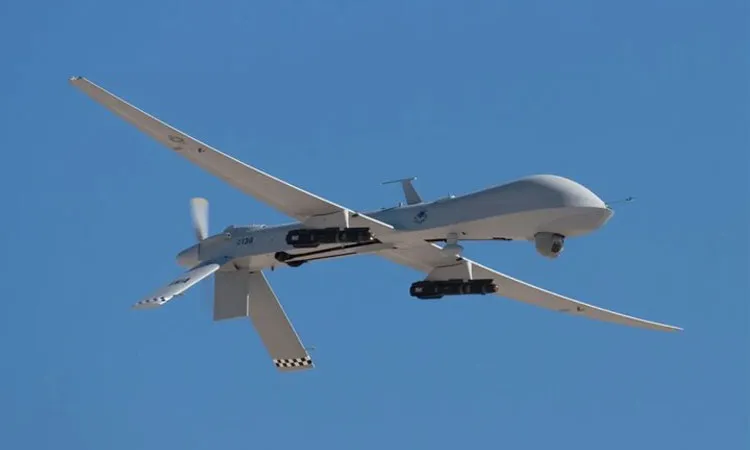
On February 4, tensions escalated after a US Navy jet downed an Iranian drone near the aircraft carrier USS Abraham Lincoln in the Arabian Sea. The US military also reported harassment of a US-flagged merchant vessel in the Strait of Hormuz.
Iran Signals Possible Compromise The Trump administration is seeking an agreement to curb Iran’s nuclear programme and prevent it from developing nuclear weapons. On Sunday, Iran’s Deputy Foreign Minister Majid Takht-Ravanchi said Tehran could consider compromise if sanctions are eased.
“The ball is in America’s court,” he told the BBC. “If we see sincerity, we can move toward an agreement.”
Oman hosted the first round of indirect talks on February 6. Similar negotiations last year collapsed after a brief war between Iran and Israel, which included US strikes on Iranian nuclear sites.
US Secretary of State Marco Rubio, speaking in Budapest, said Washington hopes for a negotiated solution. “The president prefers peaceful outcomes,” he said.
Trump confirmed on Friday that the USS Gerald R. Ford, the world’s largest aircraft carrier, is being deployed to the region. Iran has warned it will respond if attacked.
The US insists any deal must ban uranium enrichment. Iran rejects that demand, saying its nuclear programme is peaceful. Before the June conflict, Iran was enriching uranium up to 60% purity, close to weapons-grade levels.
Grossi’s meeting with Araghchi is significant after Iran suspended full cooperation with the IAEA following the June war. The agency says it cannot verify the status of Iran’s near weapons-grade uranium stockpile. Grossi has said Iran’s current stockpile could theoretically produce up to 10 nuclear bombs, though he stressed this does not mean Iran has built one.
Meanwhile, Israeli Prime Minister Benjamin Netanyahu recently urged Washington to ensure any deal also curbs Iran’s missile programme and support for groups such as Hamas and Hezbollah.