- National
- Bangladesh
- Business
- International
- Sports
- Entertainment
- Politics
- Technology
- Life Style
- Religion
- Opinion
- FIFA World Cup 2026
Friday, 10 July 2026

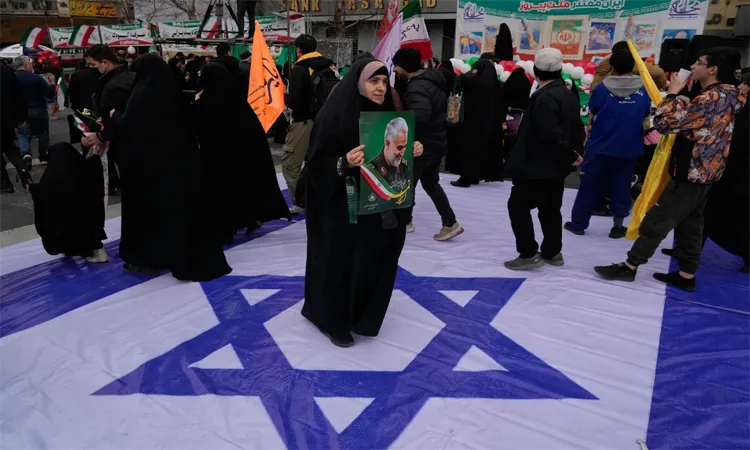
Iran marked the anniversary of its 1979 Islamic Revolution on Wednesday amid mounting pressure at home and rising tensions with the United States.
The commemoration came as U.S. President Donald Trump said he was considering sending another aircraft carrier group to the Middle East, while many Iranians continue to voice anger over a recent government crackdown on nationwide protests.
Trump made the remarks in an interview published Tuesday, as Israeli Prime Minister Benjamin Netanyahu visited Washington to urge tougher terms in any future nuclear agreement with Tehran. Oman has been mediating the latest round of talks, and a senior Iranian security official was expected to visit Qatar following earlier discussions there.

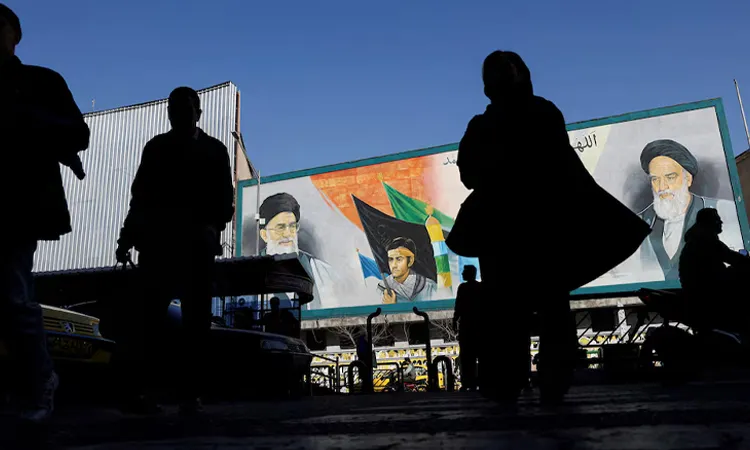
Iranian state television showed large crowds marching across the country in support of the Islamic Republic and its Supreme Leader, Ayatollah Ali Khamenei. Demonstrators waved Iranian and Palestinian flags and carried portraits of Khamenei and Ayatollah Ruhollah Khomeini, the founder of the Islamic Republic. Some chanted slogans against the United States and Israel.
At the same time, witnesses in Tehran reported hearing chants of “Death to the dictator!” from residential neighborhoods late Tuesday, underscoring deep public divisions as the anniversary was marked.
President Masoud Pezeshkian, a reformist who has supported renewed diplomacy with Washington, was expected to address supporters later at Tehran’s Azadi Square.
Iran’s population of about 85 million includes strong supporters of the ruling system, including members of the powerful Revolutionary Guard. Others attend anniversary events as part of government-organized activities or for the holiday atmosphere. Critics, however, continue to accuse authorities of using excessive force to suppress dissent.
Speaking to Russia’s state broadcaster RT, Iranian Foreign Minister Abbas Araghchi said Tehran remains wary of U.S. intentions.
“We do not have full trust in the Americans,” Araghchi said, referring to past negotiations that collapsed amid military escalation. He said Iran wants assurances that such a scenario will not be repeated.
Despite those concerns, Araghchi said it may be possible to reach an agreement stronger than the 2015 nuclear deal signed under former U.S. President Barack Obama. Trump withdrew the United States from that deal during his first term.
The U.S. military has increased its presence in the region in recent weeks, deploying an aircraft carrier and additional forces. Trump told Axios he was considering sending a second carrier, saying the United States has “an armada” moving toward the area.
U.S. officials say the buildup is meant to deter Iran and protect shipping in key waterways, including the Strait of Hormuz. Tensions remain high as diplomatic efforts continue alongside military posturing.