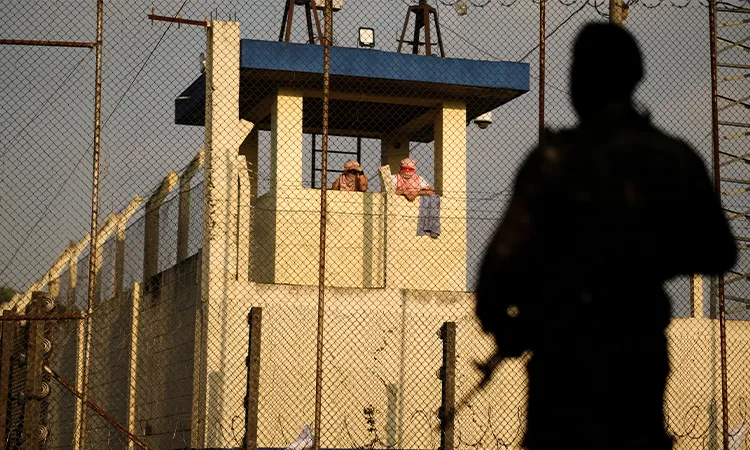
In a major crackdown on human trafficking, Libyan security authorities have rescued over 200 migrants from a hidden underground prison in the southeastern town of Kufra.
The victims, primarily from sub-Saharan African nations like Somalia and Eritrea, were discovered living in "inhumane conditions" in cells dug nearly three meters deep.

Some migrants had been held for up to two years in darkness. The freed group includes men, women, and children. Sources describe the site as one of the most severe discoveries of crimes against humanity in the region, featuring cramped, airless underground cells used to extort ransoms from families.
The prison was allegedly run by a notorious Libyan trafficker who remains at large.6 Security forces are currently conducting a manhunt to bring the ringleader to justice.
This rescue follows a string of horrific discoveries in eastern Libya. Just last week, authorities uncovered a mass grave in Ajdabiya containing 21 bodies of migrants. Investigations revealed that survivors from that same group bore visible signs of brutal torture. Libya's Attorney General has already referred one suspect (initials M.F.H.) to court on charges of human trafficking and murder in connection with the site.
Since the 2011 uprising, Libya has struggled with a fractured security landscape, making it a dangerous hub for human smuggling. Kufra, located 1,700 km from Tripoli, has recently seen an influx of tens of thousands of Sudanese refugees fleeing conflict, further straining the region and leaving displaced people vulnerable to criminal gangs.
The operation in Kufra was carried out by eastern-based security forces. While over 200 were rescued, recent reports from the IOM indicate that over 1,000 migrants have died or gone missing in the Central Mediterranean route since the start of 2025, highlighting the continued danger of this transit route.