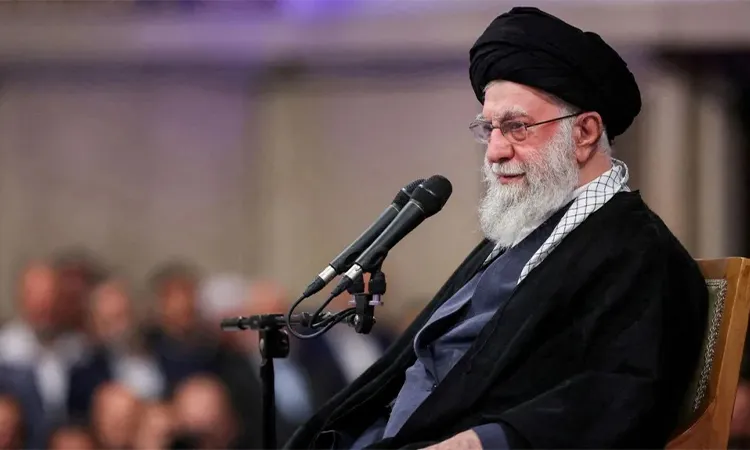
Iran’s Supreme Leader Ayatollah Ali Khamenei has labeled anti-government protesters "troublemakers" acting on behalf of the United States, as the country enters its 13th day of widespread unrest.
In a televised address on Friday, the 86-year-old leader remained defiant, stating that the Islamic Republic would not back down. Concurrently, Iranian authorities sent a formal letter to the UN Security Council accusing the U.S. of "interfering in internal affairs" and inciting violence.

The protests, sparked by economic grievances, have evolved into the largest challenge to the government in years. Human rights organizations report a heavy toll in Iran Human Rights (IHRNGO) reports at least 51 protesters killed, including nine children. Over 2,277 individuals have been detained since December 28. Reports indicate at least 14 security personnel have also died.
Iran remains under a near-total internet blackout, which began Thursday evening. Nobel laureate Shirin Ebadi and other activists have warned that the communication cutoff often precedes a "massacre," as security forces can operate without international scrutiny. Residents in Shiraz reported a rush on supermarkets, while the lack of connectivity has rendered ATMs and debit card systems useless.

The U.S. President warned of "hitting Iran very hard" if the killing of protesters continues. Meanwhile, a joint statement from the leaders of the UK, France, and Germany—Sir Keir Starmer, Emmanuel Macron, and Friedrich Merz—expressed deep concern over the violence and urged Iranian authorities to protect the right to peaceful assembly.
Iran’s National Security Council has signaled a "no leniency" policy, describing protesters as "armed vandals." The Revolutionary Guard (IRGC) added that it will continue operations until the "enemy's plan" is defeated. Despite the threats, verified footage shows demonstrators in cities like Zahedan continuing to chant "death to the dictator."