


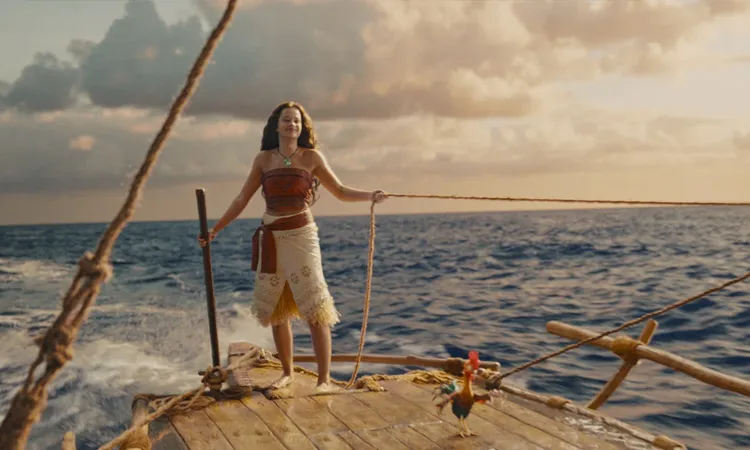
The Walt Disney Company’s heavily anticipated live-action remake of Moana secured the number-one spot at the domestic box office but fell flat commercially with failing to match the massive success of its animated predecessors.
Produced at a staggering cost of $250 million, the film pulled in a modest $43 million in the United States and Canada during its opening weekend. Globally it debuted to $95 million across 50 markets a figure well below expectations for one of Disney's most lucrative franchises.

The lukewarm reception highlights growing audience fatigue and stiff competition in the family entertainment sector. Universal's Minions & Monsters and Disney's own Toy Story 5 continue to draw large crowds, creating a crowded marketplace for PG-rated films. Furthermore the industry experts note that the live-action version arrived just 19 months after the animated sequel Moana 2 which grossed over $1 billion worldwide in late 2024.

Directed by Thomas Kail remake features Dwayne Johnson reprising his role as the demigod Maui and introduces newcomer Catherine Lagaʻaia as the Polynesian princess. While Lagaʻaia received praise for her performance, the film itself has been widely panned by critics, earning a dismal 34% approval rating on Rotten Tomatoes. Reviewers heavily criticized the movie for being a shot-for-shot replication of the 2016 original relying on flat unconvincing CGI backgrounds that lack the vibrancy of the source material.

Despite the critical backlash general audiences were more forgiving. The film received a promising "A-" CinemaScore driven largely by positive recommendations from parents and female viewers, who made up 66% of the opening weekend audience.

Disney’s history with live-action adaptations remains mixed; while projects like Lilo & Stitch surpassed the billion-dollar milestone others like Snow White struggled significantly.
For cinema operators and global entertainment markets including those tracking trends from Bangladesh, Moana's underwhelming splash underscores a growing shift: modern audiences increasingly demand original storytelling over rapid production-line nostalgia.

