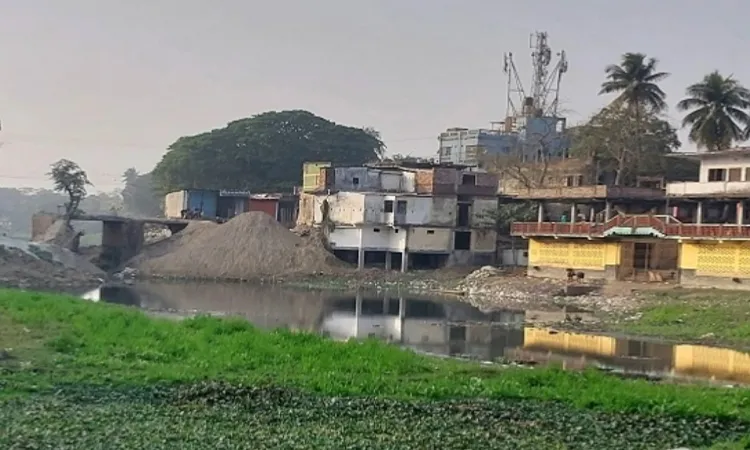
The once calm and flowing Chitra River in Narail is now facing an existential crisis due to illegal encroachment and severe pollution. Influential groups have occupied parts of the river by building permanent and temporary structures, while sewage, plastic and market waste continue to pollute the water.
The river, which flows through the heart of Narail town, is gradually losing its width and natural flow. Although the district administration has prepared a list of encroachers, effective action to free the river has yet to begin.
A recent visit to areas near the old terminal, Machimdia and Rupganj Bazar found numerous structures built along both banks of the river. In several places, parts of the river have reportedly been filled to construct shops, houses and commercial establishments.
Local residents said eviction drives are occasionally conducted, but encroachers often return within days. They also alleged that the absence of clearly marked river boundaries has made enforcement difficult.
Pollution has become another major threat to the Chitra River. Several city drains discharge directly into the river. Waste from slaughterhouses and fish markets in Rupganj Bazar is also dumped into the water regularly. Polythene, single-use plastics and medical waste are further obstructing water flow and worsening contamination.
Residents living near the river say foul odors from polluted water have made movement along the banks difficult. Environmental degradation has also affected aquatic life. Locals said native fish species have sharply declined, while dolphins that were once seen in the river have disappeared.
Health risks are also increasing for people living near the river, as polluted water may contribute to skin and waterborne diseases.
Members of Narail’s civil society say eviction drives alone will not solve the crisis. They called for dredging the riverbed, fixing permanent boundaries, modernizing the town’s drainage system and establishing a waste treatment plant to stop untreated waste from entering the river.
“Chitra is not just a river; it is part of Narail’s heritage and history,” local environmental activists said, warning that the river could disappear within a few years if immediate action is not taken.
Kazi Hafizur Rahman, leader of the Save the River Movement, said, “We have been demanding the recovery and cleanup of the Chitra River for more than two decades. Different governments made promises, but effective implementation has not happened.”
According to a source linked to the district administration, authorities have identified at least 63 illegal occupiers along the Chitra River following demands from environmental groups and local residents.
Narail Additional Deputy Commissioner (Revenue) Hosne Ari Tanni said the administration has started initiatives to recover and clean the river. “Legal action will be taken against illegal encroachers and those responsible for polluting the river,” the official said.