- National
- Bangladesh
- Business
- International
- Sports
- Entertainment
- Politics
- Technology
- Life Style
- Religion
- Opinion
- FIFA World Cup 2026
Thursday, 16 July 2026

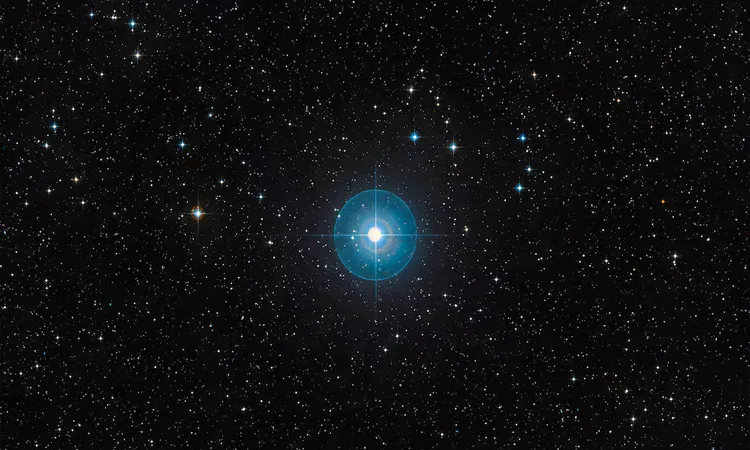
Two independent teams of astronomers have discovered the dimmest exoplanet ever directly imaged from Earth, hidden in a young star system just 63 light-years away.
The cold gas giant orbits Beta Pictoris, a star in the southern constellation Pictor. The breakthrough came late last year when a European team using the Very Large Telescope in Chile and a US team using NASA’s James Webb Space Telescope detected the planet within days of each other. Both groups deliberately kept their work secret to ensure unbiased verification with publishing their joint findings in the Astrophysical Journal Letters.
Slightly larger than Jupiter, the newly found planet takes 91 years to complete a single orbit. It had remained undetected for over a decade with masked by the intense brightness of its host star and two larger neighboring planets. Astronomers noted that the planet was 100 times fainter than the other objects they were originally tracking.
The Beta Pictoris system is estimated to be just 20 million years old—extremely young compared to our 4.5 billion-year-old solar system. Scientists believe the giant planets here have stabilized, but smaller rocky planets like Earth may still be forming amidst colliding asteroids and comets.
Directly imaging exoplanets is an extraordinary technical feat. Out of more than 6,000 confirmed planets outside our solar system, fewer than 100 have been photographed directly. Most are typically found indirectly when they pass in front of their stars and block their light. Researchers expressed immense excitement with noting that this discovery provides a rare and pristine look at a planetary system in its infancy.
Note: The AP Health and Science Department receives support from the Howard Hughes Medical Institute’s Department of Science Education and the Robert Wood Johnson Foundation. The AP is solely responsible for all content.