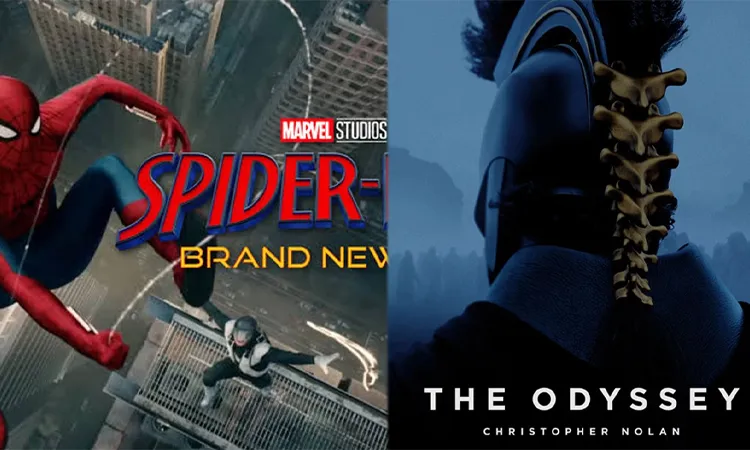
Christopher Nolan has reinvented the Homeric legend with 'The Odyssey' delivering a colossal of three-hour IMAX epic that functions as both a blockbuster spectacle and a deeply moving anti-war narrative. Releasing on July 17, the film serves as a spiritual sequel to Oppenheimer and trading nuclear anxiety for a profound psychological exploration of wartime trauma and PTSD.
Matt Damon delivers a career-best performance as Odysseus, the careworn military commander struggling to return to Ithaca after a decade of war.

Nolan strips away traditional mythological romance with framing the Trojan War not as a grand romantic crusade but as a cynical commercial dispute over trade routes. The infamous 'Trojan Horse' is re-imagined as a devastating act of corruption a moral ground zero that shatters civil society and invites the wrath of arbitrary and dysfunctional gods.

Odysseus’s journey home is a perilous of chaotic ordeal of survival. His men encounter terrifying monsters and realized through a masterful blend of practical animatronic puppets and digital effects. Meanwhile, his wife Penelope (Anne Hathaway) and psychically wounded son Telemachus (Tom Holland) endure a toxic vacuum of power at home and besieged by cruel suitors led by Antinous (Robert Pattinson).

Shot by cinematographer Hoyte van Hoytema, the film makes history by utilizing the full IMAX screen for its entire duration, capturing breathtaking landscapes of loneliness alongside full-tilt battle sequences.

Backed by a propulsive score from Ludwig Göransson and a stellar ensemble cast, Christopher Nolan successfully subverts foundational text to reflect contemporary anxieties regarding foreign wars and human resilience. The Odyssey stands out as a towering cinematic achievement and an instant Oscar front-runner.