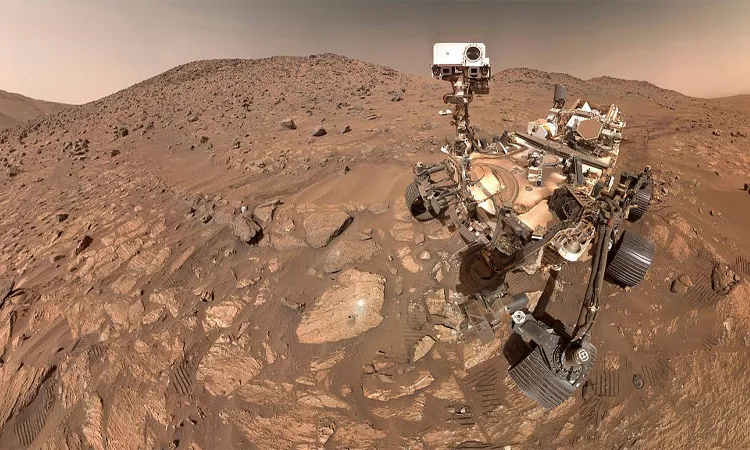
NASA’s Perseverance rover has discovered underground remains of an ancient river delta on Mars, providing some of the oldest evidence of water on the planet.
Using its RIMFAX ground-penetrating radar, the six-wheeled rover mapped geological features up to 35 meters beneath the surface while exploring 6.1 km of Jezero Crater in Mars’ northern hemisphere.
The newly identified delta, a fan-shaped sediment deposit formed where rivers meet larger water bodies, is estimated to be 3.7 to 4.2 billion years old, predating the nearby Western Delta. Researchers say these findings indicate Jezero Crater once hosted a water-rich environment capable of preserving biosignatures—chemical or physical traces of past life.
This discovery builds on previous findings of potential microbial life in rock samples and adds to mounting evidence that Mars had a warmer, wetter climate billions of years ago. Scientists highlight that river deltas on Earth often concentrate sediments and create niches for microbial life, making these Martian features key targets in the search for signs of past life.
The research underscores the value of subsurface exploration and complements global efforts, including China’s Zhurong rover findings of possible ancient Martian shorelines.
Perseverance’s continued exploration is helping scientists reconstruct Mars’ early history and assess its habitability.