


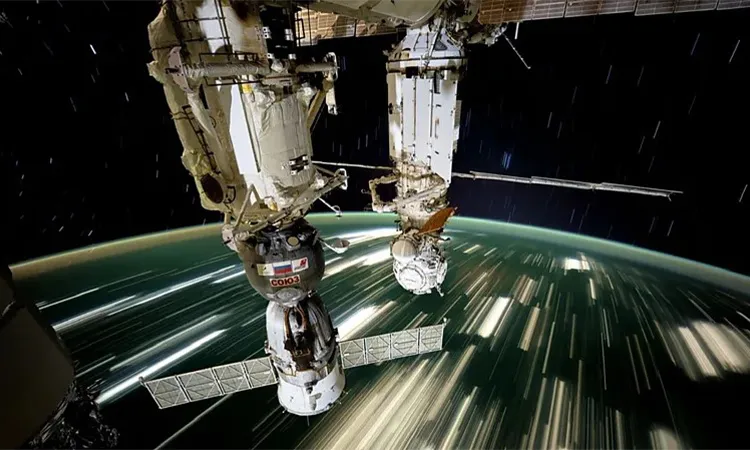
The International Space Station (ISS) marks a historic milestone—25 years of continuous human occupation since the launch of Expedition 1 in November 2000. Orbiting 400km above Earth, the station stands as the most expensive and ambitious engineering project in history.

The station began with three modules (Zarya, Zvezda, Unity) and has grown to nearly 20 pressurized modules with a wingspan longer than an Airbus A380.

Life in Microgravity: Astronauts live in a volume equivalent to a six-bedroom house but must exercise two hours daily to prevent bone and muscle loss. The station's life support systems recycle 98% of all fluids, including sweat and urine.

Scientific Legacy: Over 4,400 research papers have been published, covering breakthroughs in pharmaceuticals, material sciences, and disease research.
Latest Updates (2024-2025): The report highlights the "eight-day" Starliner mission that famously extended into 2025. Astronauts Sunita Williams and Butch Wilmore, who were stranded due to technical failures, finally returned to Earth in March 2025 after 286 days in orbit.

The Cost of Space: With an estimated total cost of $150 billion, the ISS remains a feat of cooperation between the US, Russia, Europe, Japan, and Canada, though it now faces increasing threats from orbital space junk.
