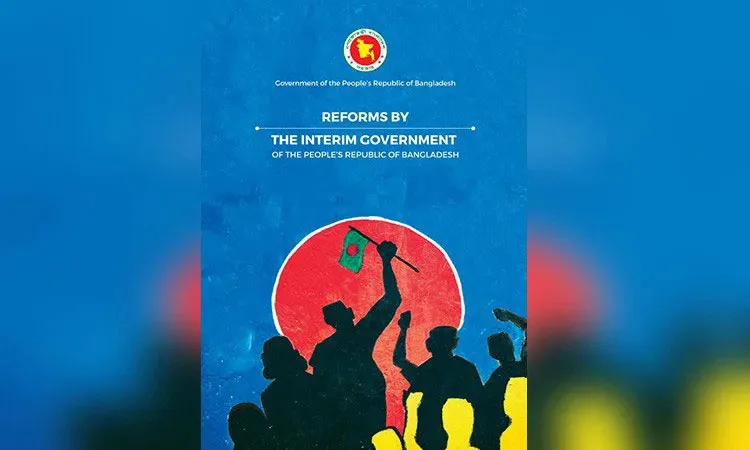
The Chief Adviser’s Press Wing released the "Reform Book" today, a comprehensive record of the policy shifts and institutional overhauls initiated since the interim government took office in August 2024.
The document outlines the transition from the 16-year administration of Sheikh Hasina—described by the press wing as a period of "fascist-style repression"—to a systemic reconstruction led by Nobel Laureate Professor Muhammad Yunus.
Inheriting what it termed an "institutional breakdown," the interim government has enacted approximately 130 laws and issued over 600 executive decisions in its first 18 months. Data suggests an 84% implementation rate for these measures.
Judicial Independence: All courts have been placed under Supreme Court administration, removing executive control. Judicial appointments are now merit-based.
Law Enforcement: The Rapid Action Battalion (RAB) has been restructured and renamed the Special Intervention Force. Over 1,200 officers face suspension pending investigation into past abuses.
Media Freedom: Politically motivated charges against journalists have been dropped. The government confirmed that no media outlets, including those aligned with the previous regime, have been shut down.
The report highlights a pivot in foreign policy and fiscal discipline. To combat "years of corruption," the government has frozen billions in siphoned assets and granted the Bureau of Statistics full autonomy to ensure data integrity.
The reform process culminated in the July Charter, a foundational document for constitutional reform developed after seven months of televised national consultations. The Charter, which seeks to establish permanent checks and balances against authoritarianism, is currently awaiting a national referendum.
"Sixteen years of damage cannot be remedied in eighteen months," the Press Wing stated. "But Bangladesh has turned decisively away from authoritarian rule."