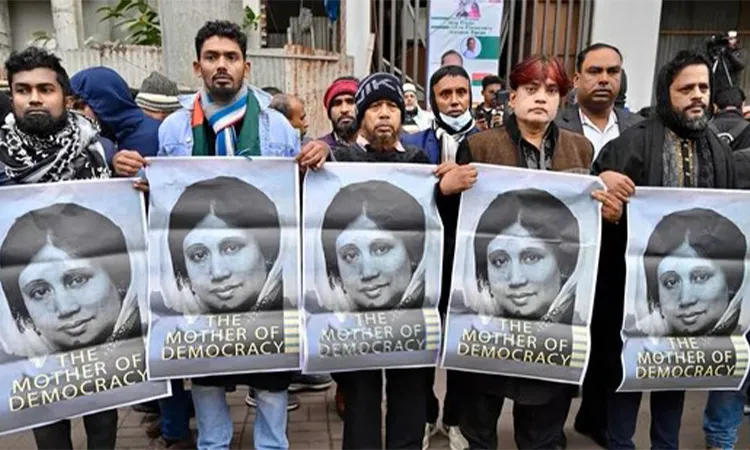
The passing of Begum Khaleda Zia, the first female Prime Minister of Bangladesh and Chairperson of the Bangladesh Nationalist Party (BNP), has triggered a wave of reflections from the world’s leading news organizations.
Major outlets from New York to Doha have characterized her death at age 80 as the conclusion of a defining chapter in South Asian history, highlighting her journey from a "shy housewife" to a formidable political titan.
International coverage largely centered on Zia’s role in ushering in democracy and her decades-long "Battle of the Begums" with rival Sheikh Hasina.
The New York Times: Framed Zia’s career within the context of dynastic politics, noting how her rivalry with Hasina "shaped the fate of the young South Asian nation." The report touched on her final decade of hardship under house arrest, while noting her resilience as she witnessed the "end of tyranny" shortly before her death.
Reuters: One of the first to break the news globally, Reuters described her as a "dominant political figure" who, despite years of imprisonment, maintained an unwavering command over a significant portion of the Bangladeshi electorate.
BBC: Focused on her personal transformation, titled its coverage: "Khaleda Zia: Slain leader’s widow who went on to lead Bangladesh." It detailed her rise from the shadow of her husband, Ziaur Rahman, to becoming the country's first elected woman leader.
Bloomberg: Provided a unique perspective by framing her as a "Force for Democracy," emphasizing her pivotal role in ending military rule and establishing a parliamentary system in the early 1990s.
Al Jazeera: Captured the emotional pulse of the nation, reporting on the widespread mourning and describing her as a "towering figure" in a perennially turbulent political landscape.
The Guardian & Washington Post: Both outlets emphasized that the political identity of modern Bangladesh was forged through the generational rivalry between Zia and Hasina, a conflict that defined the country's trajectory for over 30 years.
Dawn (Pakistan): Highlighted her struggle against political persecution, noting that her release from imprisonment only came after the dramatic political shift that saw Sheikh Hasina flee the country.
The Times of India: Focused on the diplomatic impact, highlighting Prime Minister Narendra Modi’s condolences. The report recalled her contributions to bilateral relations, punctuated by photos of her meeting with Modi in 2015.
Across the board, the global media consensus portrays Khaleda Zia not just as a former head of government, but as a symbolic pillar of Bangladeshi nationalism whose influence will continue to resonate long after her final rites.