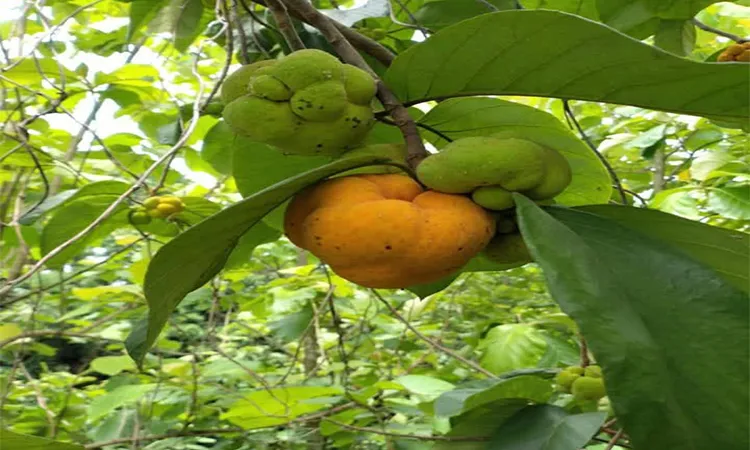
Once a common sight in rural Bangladesh, the highly nutritious Dewa (Artocarpus lakucha) tree is quietly disappearing. Known for its distinct sweet-and-sour taste, this late-summer fruit was traditionally a seasonal staple of rural life.
Today, the fruit is increasingly rare in Lohagara, Narail. Despite its deep roots in local heritage, many among the younger generation have never even heard of it.
Dewa is an indigenous superfood packed with Vitamin C, calcium, potassium, iron, and antioxidants. Unani medicine practitioners highlight its immune-boosting properties. The fruit's flavonoids act as powerful antioxidants that help prevent colds and infections. It also aids digestion, helps control blood pressure, and relieves constipation. Low in calories, it is highly regarded for weight management.
Scientifically known as Artocarpus lakucha, Dewa is a tropical evergreen belonging to the Moraceae family. Regionally called Dhewa, Madar, Dewful, Banjakhatal, or Batta, its inner flesh resembles a jackfruit cluster. Green when raw, it turns yellow upon ripening, revealing a soft, reddish-yellow core. Beyond its fruit, the tree also yields high-quality timber.
Recent visits across Lohagara upazila reveal a sharp decline in Dewa trees. Driven by rapid urbanization, deforestation, and climate change, the trees are a fraction of their former numbers.
"In our childhood, nearly every home had a Dewa tree," recalled local journalist Sardar Rais Uddin Tipu. "We used to climb them and eat the ripe fruits on our way back from school. Now, nobody plants these indigenous trees."
Kishore Roy, a resident of Kachubaria village, echoed this sentiment: "Our mothers and aunts used raw Dewa to make stews and curries. Today’s children wouldn’t even recognize the fruit."
Tithi, a local college student, noted that while she had heard of the fruit from her elders, it is rarely seen in local markets.
Shariful Islam, a lecturer at Lakshmipasha Adarsha Women's Degree College, emphasized its cultural value. "Local fruits are part of our biodiversity," he said. "If a beneficial fruit like Dewa disappears, future generations will lose an important piece of our rural heritage. We must make students aware of our native environment."
Health and agricultural officials agree on the need for preservation. Dr. Abul Hasnat, Lohagara Upazila Health and Family Planning Officer, reiterated the fruit's medicinal value, noting its effectiveness in boosting immunity and keeping the body refreshed during the summer heat.
Lohagara Upazila Agriculture Officer Munmun Saha warned that a lack of commercial cultivation has pushed the tree toward extinction. "The Upazila Agriculture Department is actively encouraging residents to plant indigenous fruit trees around their homes," Saha said. "If we do not take initiatives to preserve the tree now, this valuable source of natural nutrition will become even rarer."