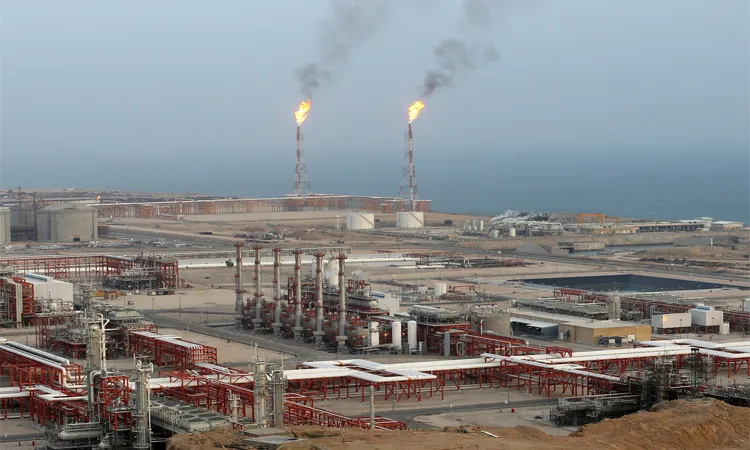
Iran’s largest gas field, South Pars, was hit on Wednesday, marking a major escalation in the ongoing U.S.-Israeli military conflict in the region.
Tehran announced it would retaliate against oil and gas infrastructure across the Gulf, including facilities in Saudi Arabia, the UAE, and Qatar.

The attack reportedly targeted gas tanks and refinery sections, causing fires that were later brought under control. Israeli media widely reported the strikes were carried out by Israel with U.S. consent, though neither country immediately acknowledged responsibility. Qatar condemned the attack, calling it a “dangerous and irresponsible escalation” threatening global energy security, while the UAE also denounced it.
South Pars, shared with Qatar, is part of the world’s largest natural gas deposit. The strike caused oil prices to surge, with Brent crude rising around 5% to above $108 per barrel. Stock markets declined amid fears of prolonged disruption to energy supplies.
In retaliation for Israeli attacks—including the killing of senior Iranian officials—Tehran fired missiles targeting Israel, as well as U.S. military bases in Bahrain, Iraq, Jordan, Kuwait, Saudi Arabia, and the UAE. Iran warned that Saudi Arabia’s Samref Refinery, Jubail Petrochemical Complex, the UAE’s Al Hosn Gas Field, and Qatar’s Mesaieed and Ras Laffan facilities are now “direct and legitimate targets,” urging evacuation before strikes.

Israel also intensified attacks on Lebanon, targeting central Beirut in some of the heaviest airstrikes in decades. The conflict has caused thousands of deaths across Iran, Lebanon, Iraq, Gulf states, and Israel, with millions displaced.
Global energy markets remain highly volatile as the war continues to threaten oil and gas exports through the Strait of Hormuz, which handles about 20% of worldwide supply. Analysts warn that further escalation could drive oil prices above $110 per barrel, worsening global energy security.