


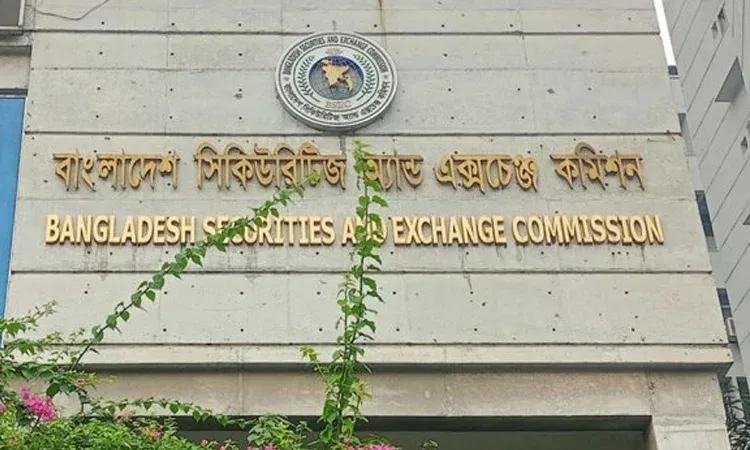
The approval of shareholders and the High Court is currently required for the merger or acquisition of a listed company with another listed or unlisted company. However, there is no legal requirement for the Bangladesh Securities and Exchange Commission (BSEC) to supervise or approve such deals.
To address this gap, BSEC has proposed new rules aimed at making the process more transparent and accountable. On Saturday, the regulator published the draft “Bangladesh Securities and Exchange Commission (Corporate Restructuring) Rules, 2026” and invited public opinion until June 7.
According to the commission, the proposed rules are intended to ensure fair valuation, proper disclosure of information and greater transparency in corporate restructuring, while protecting the interests of general investors, particularly minority shareholders.
Under the current Companies Act, companies involved in mergers or acquisitions must obtain High Court approval. Although BSEC can provide observations during the process, critics say the regulator has often remained inactive or sided with vested interests in past cases, leaving minority investors exposed.
A merger refers to the combination of two or more companies into a single entity, while an acquisition occurs when one company purchases and controls another within its corporate structure. In both cases, the businesses ultimately operate as one entity, either under an existing name or a new one.
If approved, the draft rules would make BSEC oversight mandatory throughout the restructuring process. Companies would also be required to appoint an independent valuer from a BSEC-approved panel of audit firms or merchant banks to determine fair share exchange or conversion ratios.
According to the draft rules, a restructuring proposal must first be approved by the company’s board of directors. It must then be submitted to BSEC and the stock exchanges within 30 days for review.
After regulatory observations are completed, the proposal must be approved through a special resolution at an extraordinary general meeting (EGM). For approval, at least 75 percent of the general shareholders present — excluding sponsors, directors and shareholders owning more than 5 percent shares — must support the proposal.
The final approval would come from the High Court.
The proposed rules also introduce stricter requirements for asset valuation. An independent valuer appointed from a commission-approved panel would be required to use at least two valuation methods, including both absolute and relative valuation approaches.
Absolute valuation considers factors such as a company’s earnings and cash flow, while relative valuation compares the company with similar firms in the market.
The draft rules also propose a separate report assessing the impact of mergers or acquisitions on general shareholders. Companies would additionally be required to provide a list of shareholders who oppose the proposal or express dissenting views.
Merchant bank officials have welcomed the proposed framework, saying it could improve transparency in merger and acquisition deals. However, some stakeholders believe the rules should also include a clear exit mechanism for shareholders unwilling to remain invested in the restructured company.
Saiful Islam, president of the stockbrokers’ association DBA, told Samakal that many previous merger and acquisition deals had harmed general investors. He said the effectiveness of the new rules would depend on how strongly the commission enforces them and protects shareholder interests.

