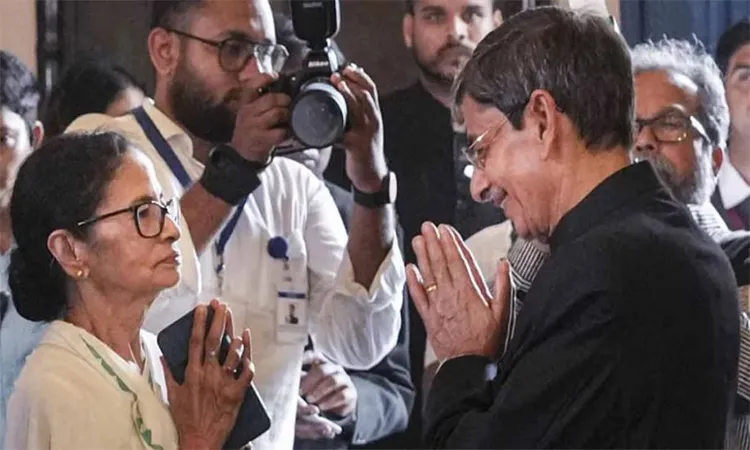
Rabindra Narayan Ravi, also known as N. Ravi, assumed office as the new Governor of West Bengal on Thursday, March 12. He was administered the oath of office by Calcutta High Court Justice Sujoy Pal at Lok Bhavan, the official residence of the Governor in Kolkata.
The ceremony was attended by West Bengal Chief Minister Mamata Banerjee, cabinet members, senior administrative officials, and notable personalities from various fields. N. Ravi succeeds outgoing Governor C. V. Ananda Bose.
In a Bengali message after the swearing-in, Governor Ravi said he feels fortunate and humbled to serve a state that is an important center of India’s spiritual, intellectual, and cultural heritage.
In his speech, he highlighted Bengal’s rich heritage and recalled the contributions of figures such as Chaitanya, Ramakrishna, Swami Vivekananda, and Bankim Chandra Chattopadhyay. He noted that Bankim Chandra’s poem Vande Mataram became a rallying cry during India’s freedom struggle.
The Governor also mentioned Rabindranath Tagore as a “great poet and thinker” and remembered freedom fighters like Sri Aurobindo, Netaji Subhas Chandra Bose, and Shyama Prasad Mukherjee. After the ceremony, he and his wife visited the Kalighat Kali Temple in Kolkata to offer prayers.
Born on April 3, 1952, in Patna, Bihar, N. Ravi is a former IPS officer with a distinguished career in the Central Bureau of Investigation and the Intelligence Bureau. He has previously served as Governor of Nagaland, Meghalaya, and Tamil Nadu. His tenure in Nagaland is particularly noted for his key role in the Naga peace process.
With West Bengal assembly elections scheduled next month, the appointment has attracted political attention. Observers note that Ravi’s tenure in Tamil Nadu involved several conflicts with the ruling Dravida Munnetra Kazhagam government, raising curiosity about his new role.