A major diplomatic rift has emerged following Russian allegations of a massive drone attack targeting one of President Vladimir Putin’s state residences. The claim comes just hours after seemingly productive peace talks between Ukraine and the United States, threatening to stall fragile negotiations.
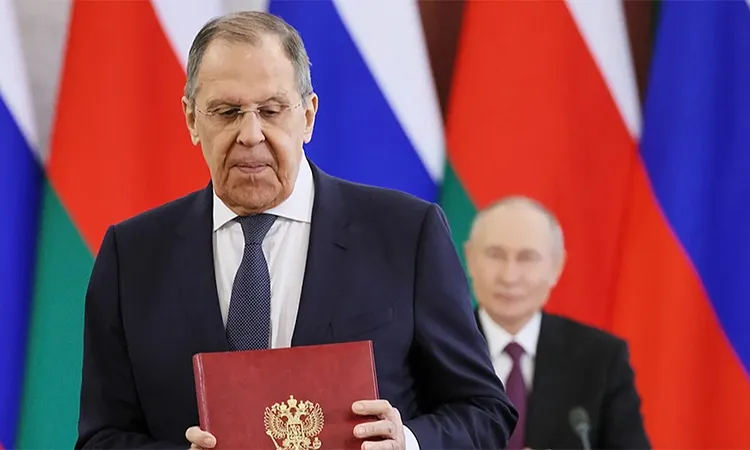
Russian Foreign Minister Sergei Lavrov announced on Monday that Kyiv launched 91 long-range unmanned aerial vehicles (UAVs) overnight. The targets were reportedly directed at Putin’s residence in the Novgorod region, located in northwestern Russia.
According to the Kremlin. all 91 drones were intercepted and destroyed by air defense systems. No casualties or structural damages were reported. Lavrov characterized the act as "state terrorism" by the "criminal Kyiv regime."
President Volodymyr Zelensky moved quickly to deny the allegations, labeling them "typical Russian lies." He argued that Moscow is fabricating excuses to justify continued strikes on Ukrainian infrastructure and government buildings.
"We cannot allow Russia to undermine the work on achieving a lasting peace," Zelensky stated, calling for the international community to speak out against the Kremlin’s rhetoric. The timing of the allegation is critical, following Sunday’s meeting in Florida between Zelensky and U.S. President Donald Trump.
Lavrov warned that Russia would "revise" its negotiating position due to the incident, though he clarified that Moscow does not intend to exit talks with the United States entirely. Zelensky posted on X (formerly Twitter) that Russia is attempting to "undermine all achievements" made during recent diplomatic efforts with the Trump administration.
The controversy shadows a "95% complete" agreement on security guarantees for Ukraine, which would span 15 years. While the U.S. and Ukraine have found common ground on security, deep divisions remain over the Russian-occupied Zaporizhzhia nuclear plant and the Donbas region.
Following the Florida summit, the White House confirmed that President Trump held a "positive call" with Vladimir Putin, though the latest accusations from Moscow suggest the path to a ceasefire remains volatile.