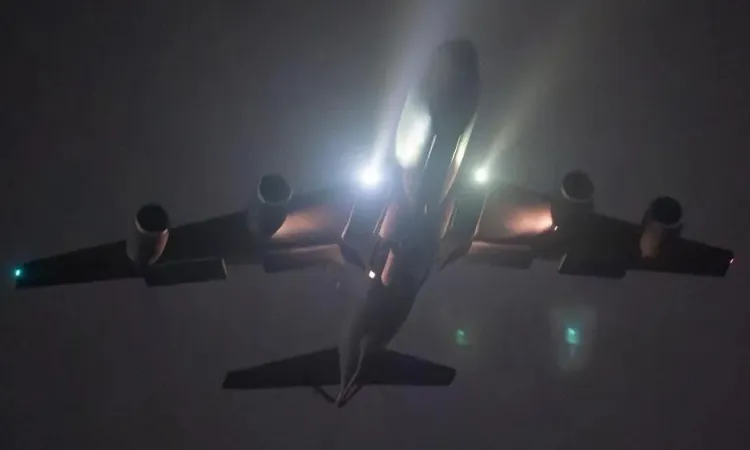
The United States military, in coordination with Jordanian forces, has conducted a "massive strike" against Islamic State (IS) targets in Syria. The operation, dubbed Operation Hawkeye Strike, was launched as a direct retaliation for a December 13 ambush in Palmyra that killed two U.S. soldiers and a civilian interpreter.
U.S. Central Command (CENTCOM) confirmed that fighter jets, including A-10 Thunderbolt IIs and F-15E Strike Eagles, alongside attack helicopters and artillery, struck more than 70 targets across central Syria.3 The mission utilized over 100 precision munitions to dismantle IS infrastructure, weapons sites, and headquarters.
U.S. Secretary of War Pete Hegseth described the strikes not as a new war, but as a "declaration of vengeance," warning that those who target Americans will be hunted "ruthlessly."
The Syrian Observatory for Human Rights (SOHR) reported that the strikes hit IS positions near Raqqa and Deir ez-Zor, killing a prominent IS leader and several fighters.
President Donald Trump stated that the new Syrian government, led by transitional President Ahmed al-Sharaa (formerly known as Abu Mohammad al-Julani), is "fully in support" of the U.S. action.
The retaliation follows an ambush on a joint patrol on December 13.7 While IS is blamed, reports from SOHR and Syrian officials suggest the gunman was a member of the Syrian security forces who had been infiltrated or radicalized.
This massive military response highlights the Trump administration's "Peace through Strength" policy and the shifting political landscape in Syria following the ouster of the Assad regime in late 2024.