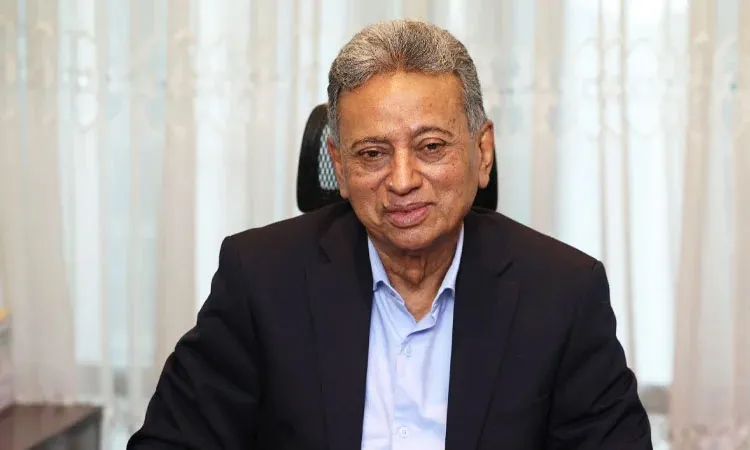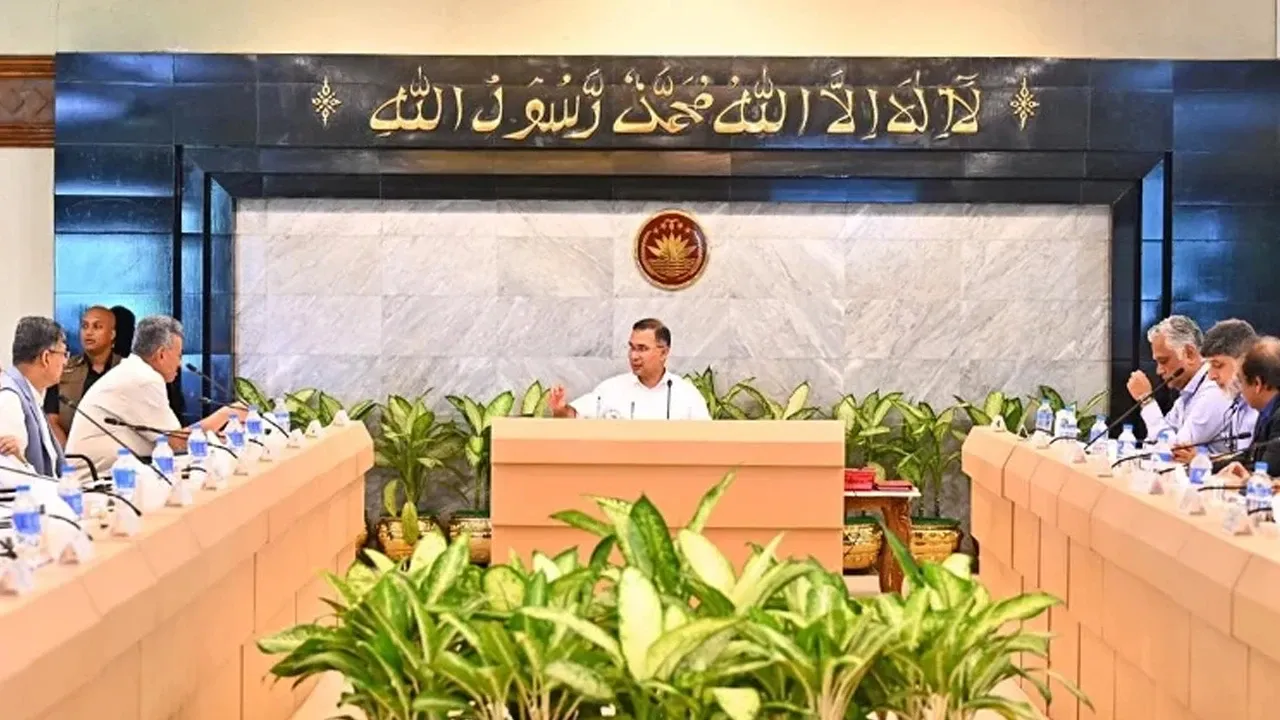
Finance Minister Amir Khosru Mahmud Chowdhury has warned that anyone attempting to obstruct the government's deregulation agenda will face strict action, as the new administration prioritizes simplifying business regulations and improving the investment climate.
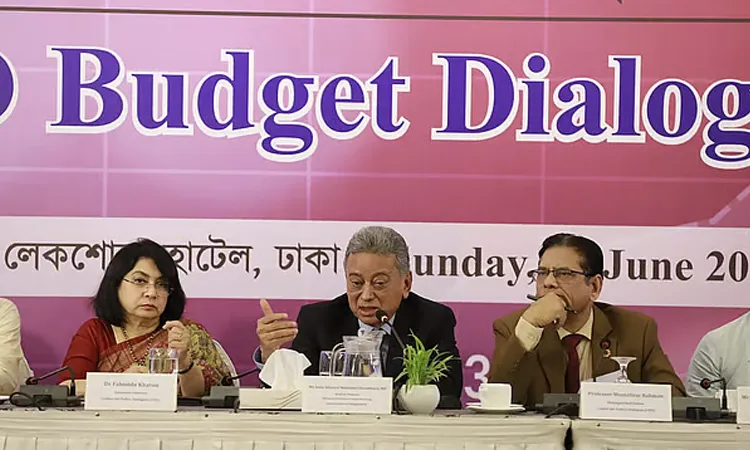
"If anybody obstructs the deregulation process, they will be shown the door," Khosru said on Sunday during a budget dialogue organized by the Centre for Policy Dialogue (CPD) at a Dhaka hotel.
In an address focused on unblocking business and investment, he argued that the country has become "overregulated," creating unnecessary barriers for businesses and citizens.
"The government was elected with commitments to the people, and we intend to fulfill them," he stated.
Khosru announced the formation of a task force to oversee the implementation of budget measures aimed at simplifying regulations. The government is also developing a dedicated online platform for businesses and citizens to report bureaucratic obstacles or regulatory harassment.
"If any citizen or businessperson feels hindered by the improper implementation of these reforms, they will be able to report it through the website," he added.
Acknowledging that the proposed budget remains a work in progress, the minister said the government is actively reviewing stakeholder feedback. "I am not claiming this is a perfect budget. We are reviewing it," he said, noting that adjustments will be made to make it more business-friendly and responsive to public concerns.
Economic Recovery and Energy Challenges
Khosru estimated it could take at least two years to fully stabilize the economy following years of accumulated challenges. "We expect to reach a turnaround point in the third year and subsequently move toward sustained prosperity."
Addressing energy shortages, the minister described gas and electricity supply as the country's most pressing economic constraints.
"I cannot solve these problems in three months. Even with money, everything cannot be fixed immediately," he said. He criticized the previous administration for failing to pursue sufficient gas exploration and noted that the current government has launched new initiatives.
However, he cautioned that bringing additional gas into the system will take time. "It will take at least 18 months to secure, store, and distribute new gas supplies."
Reaffirming the government's ambition to transform Bangladesh into a trillion-dollar economy, Khosru stressed that reliable gas, electricity, and robust internet connectivity are essential for sustained growth. "We are investing in all three areas," he affirmed.
Project Monitoring and Trade Policy
The minister announced the launch of a digital dashboard in early July to monitor public development projects. "Instead of quarterly reviews, every project will be monitored daily," he said, explaining that the system aims to tackle long-standing delays and inefficiencies.
On trade policy, the finance minister highlighted reductions in customs duties and taxes on imported industrial raw materials, alongside expanded export incentives beyond the ready-made garment (RMG) sector. Under the revised framework, exporters across all industries can access bonded-warehouse facilities or import raw materials duty-free against bank guarantees. The requirement to open letters of credit (LCs) for certain imports has also been eased.
To raise the tax-to-GDP ratio, the government is exploring ways to bring more small retail businesses into the tax net through a simplified minimum tax regime. "You will not need to fill out complicated paperwork. Many small businesses are afraid of tax procedures and officials," he explained.
Responding to criticism over block allocations in the proposed budget, Khosru insisted the funds are intended solely for development. "We have not kept block allocations for operating expenditure."
He noted that the new government inherited around 1,300 ongoing projects, claiming many were designed without adequate economic justification. Khosru also defended the government's "Family Card" social protection program, citing pilot projects that found low targeting errors, though he added that further efforts are underway to improve beneficiary selection.
Debt Servicing and Implementation Concerns
On public borrowing, Khosru reiterated concerns about government financing crowding out private-sector investment. "Bank borrowing rates are too high for many private-sector borrowers to survive," he noted, stressing the need for cheaper financing alternatives. With debt servicing for the next fiscal year estimated at around Tk 1.25 trillion, he emphasized the need for alternative financing and public financial management reforms.
State Minister for Planning Zonayed Abdur Rahim Saki also spoke, stating the government is examining why development projects frequently miss implementation schedules and budget targets. "A comprehensive action plan will be prepared within the next one to two months," Saki announced.
Akhter Hossen, a Member of Parliament from the National Citizen Party (NCP), described the proposed budget as "unrealistic" and excessively dependent on deficit financing. He called for greater transparency and urged regular public reporting on the utilization of sectoral allocations.
Economic Inequality and Structural Reforms
PPRC Executive Chairman Dr. Hossain Zillur Rahman noted that rising household indebtedness has become a symptom of economic distress rather than investment.
"Low-income households are cutting food consumption, postponing healthcare, and taking on multiple jobs. New challenges, including mental health concerns, are emerging," Rahman said, identifying three major weaknesses in the broader economic strategy: an employment crisis, an investment crisis, and a deterioration in the quality of education.
RAPID Chairman Dr. M.A. Razzaque presented estimates suggesting that the wealthiest 1% of the population controls nearly half of the country's total wealth. Meanwhile, Economist Professor Barkat-e-Khuda argued that structural reforms are essential to achieve budget objectives, cautioning that the revenue target appears overly ambitious.
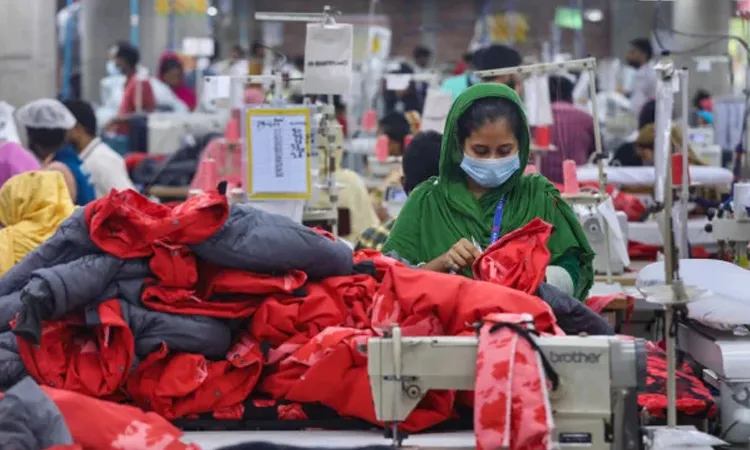
Montu Ghosh, president of the Garments Workers Trade Union Centre, urged the government to strengthen social protection measures, including rationing support for workers.
CPD Executive Director Dr. Fahmida Khatun presented the keynote paper at the event, which was chaired by CPD Distinguished Fellow Dr. Mustafizur Rahman. Other participants included business leaders such as Grameenphone CEO Yasir Azman and BGMEA Senior Vice-President Inamul Haq Khan.