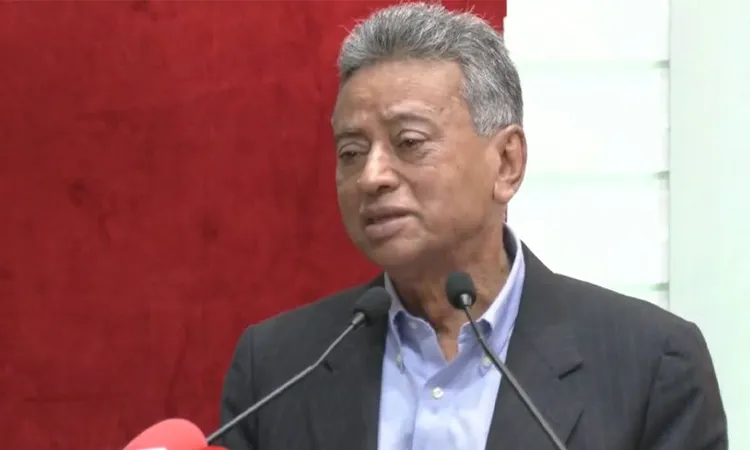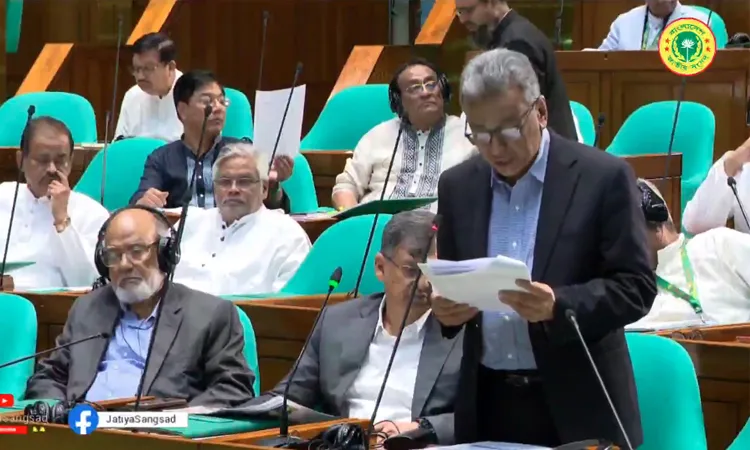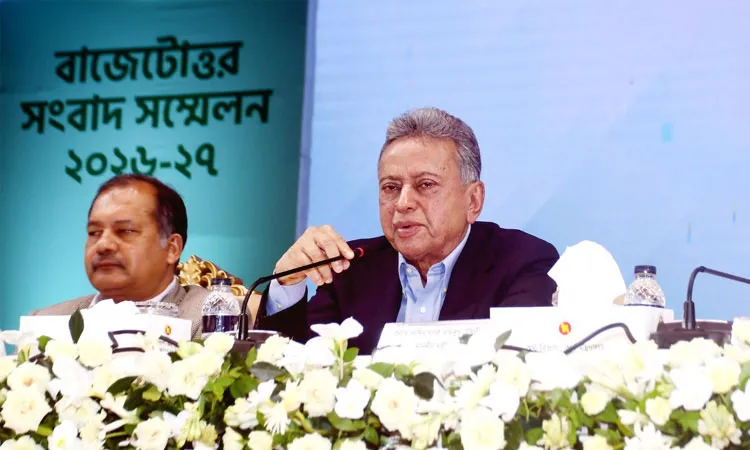
Finance Minister Amir Khosru Mahmud Chowdhury today said that Bangladesh’s economy needs a two-year "cushion" to recover from deep-rooted structural weaknesses, expressing confidence that full recovery will be achieved within four to five years.
Speaking at a post-budget press conference at the Osmani Memorial Auditorium, the minister stated that the current government inherited an economy severely burdened by banking sector distress, fragile institutions, rising poverty, declining investment and years of policy distortions.
“Bangladesh’s economy is at a stage where it needs a two-year cushion. We are currently setting the direction and laying the foundation for recovery,” the minister said, adding that immediate government priorities include economic stabilization, institutional reforms, robust social protection and human capital investment.
The minister mapped out a clear timeline for the nation's economic rebound: "From the third year, the economy will move forward more strongly and stabilize. By the fourth and fifth years, it will fully recover and stand firmly on its own feet."
The Finance Minister highlighted what he termed the largest social-sector investment package in Bangladesh’s history. This includes the introduction of Family Cards, Farmer Cards, universal health coverage initiatives and expanded preventive healthcare programs.
“Our purpose is to protect people whose living standards have declined, while simultaneously preparing them for better economic opportunities,” he explained.
To boost workforce productivity, the budget places heavy emphasis on education, vocational training, reskilling and upskilling. The government is pursuing a dual-track strategy: expanding immediate social protection for vulnerable groups while creating pathways to sustainable employment, particularly for educated, unemployed youth.
Shift to a "Creative Economy" and Job Creation A key highlight of the new budget strategy is the "Creative Economy" initiative, aimed at bringing rural artisans, craftsmen, performers, and cultural workers into the financial mainstream by connecting them with markets, finance, skills and technology.
In a significant policy departure, the minister announced that the government has deliberately moved away from a mega-project-centred development model.
“We are not chasing large prestige projects," the Finance Minister stressed. "Instead, we are prioritizing investments that generate jobs, create value and directly improve people’s lives. We are focusing on value for money.”
Despite tight fiscal and institutional constraints, he expressed strong confidence that this reform agenda will gradually transform the economy and deliver sustained medium-term growth.
The press conference was heavily attended by senior government leadership, policymakers and state officials. Present on the dais were: Cabinet Ministers & Advisers: Information and Broadcasting Minister Zahir Uddin Swapon; Power, Energy and Mineral Resources Minister Iqbal Hassan Mahmood; Education Minister Dr. A N M Ehsanul Hoque Milon; Health and Family Welfare Minister Sardar Md. Sakhawat Husain; Agriculture Minister Mohammed Aminur Rashid; and State Minister for Planning Zonayed Abdur Rahim Saki.
PMO Leadership: Adviser to the Prime Minister on Post, Telecommunication and IT Rehan Asif Asad; PM’s Adviser and PMO Spokesperson Dr. Mahdi Amin; and PM's Special Assistant on Investment and Capital Market Tanvir Gani.
Bureaucrats & Technocrats: Cabinet Secretary Nasimul Gani; Principal Secretary to the PM A B M Abdus Sattar; Bangladesh Bank Governor Md. Mostaqur Rahman; Finance Secretary Dr. Md. Khairuzzaman Mozumder; and NBR Chairman Md. Abdur Rahman Khan.