


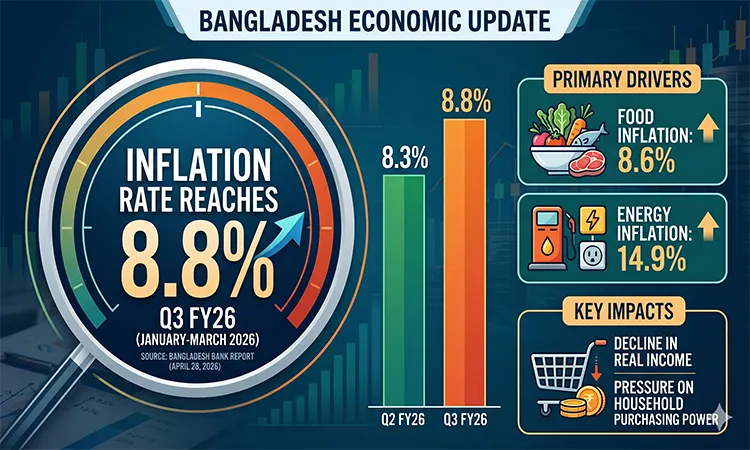
Bangladesh's average inflation rose to 8.8% year-on-year in the January-March quarter (Q3) of FY26, according to the latest quarterly report from Bangladesh Bank released today. This is an increase from the 8.3% recorded in the previous quarter.
The central bank identified rising food demand during the Eid holidays and persistent energy costs as the primary drivers of this hike.
Food and Energy Price Trends
Food inflation surged by 1.2 percentage points to reach 8.6%. A sharp rise in vegetable prices and a 44.6% contribution from protein sources (meat, eggs, and fish) fueled the increase. While cereal prices eased, retail prices for rice, lentils, soy oil, and chicken remained high. Conversely, onion prices saw a significant decline.
Energy inflation also climbed to 14.9%, driven by higher gas prices and the rising cost of solid fuels like firewood and jute sticks.
Core Inflation and Real Income
Core inflation which excludes volatile food and energy edged down slightly to 8%, thanks to lower costs in healthcare and furniture. However, transport and communication costs spiked by 19.4%, putting further pressure on consumers.
The "wage-price gap" continues to squeeze the public. While wages grew by 8.1%, they failed to keep pace with the 8.7% overall inflation rate, leading to a decline in real income for most households.
Future Outlook
The Asian Development Bank (ADB) projects full-year inflation for FY26 to hit 9%, citing global oil price volatility as a major risk. Bangladesh Bank emphasized the need for strict monitoring to protect the purchasing power of ordinary citizens.

