


As the 2024–2025 trading year draws to a close, global financial markets are witnessing a historic "Santa Claus rally." Driven by a combination of artificial intelligence (AI) sector dominance and robust U.S. economic data, Asian and American indices are capping off a bumper year with significant gains.
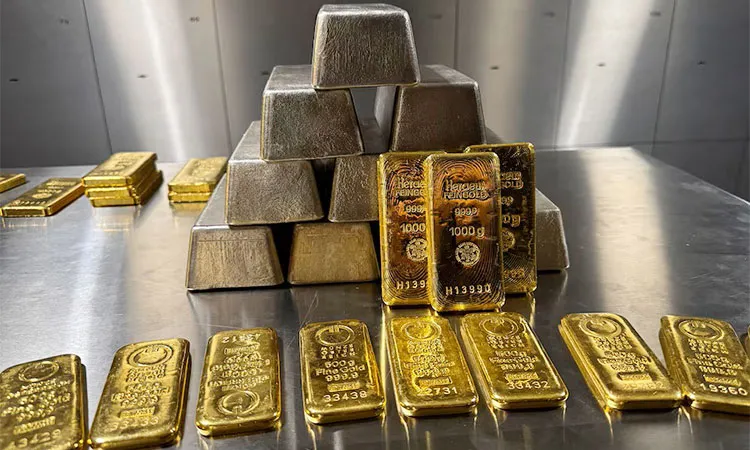
The most striking performance came from the precious metals sector. Spot gold surged 0.8% in early Asian trade to hit a new all-time high of $4,524 per ounce, marking a staggering 72% increase for the year. Silver followed suit, jumping 1.2% to a record $72.27 per ounce. Silver has emerged as the year’s top performer, with a nearly 150% annual rise—the best in its history.
Asia: MSCI’s broadest index of Asia-Pacific shares (ex-Japan) rose 0.3%, totaling a 26% gain for 2025. South Korea led the region with a meteoric 72% surge.
Japan: The Nikkei rose 0.4%, closing the year up 26%.
Wall Street: The S&P 500 reached a new closing record overnight, fueled by third-quarter U.S. GDP data that exceeded expectations.
The U.S. Dollar has weakened approximately 10% against major peers this year. The Japanese Yen strengthened to 155.78 per dollar amid fears of government intervention, while the Euro maintained its strength at $1.18, up 14% for the year. In the bond market, Treasury yields remained steady after falling significantly throughout 2025 following the resumption of Fed rate cuts.
In contrast to the broader market optimism, oil prices are heading for their third consecutive annual loss. Brent crude is currently trading at $62.41 a barrel, down 16% for the year.
Analysts at Citi suggest that while the bull market is entering its fourth year, investors should brace for "high performance dispersion." This indicates that while the overall market remains constructive, the gap between top-performing AI stocks and lagging sectors (like energy) may widen in early 2026. Market participants are now closely watching for any "intervention risk" from the Bank of Japan should the Yen continue its volatile path against the weakening Dollar.

