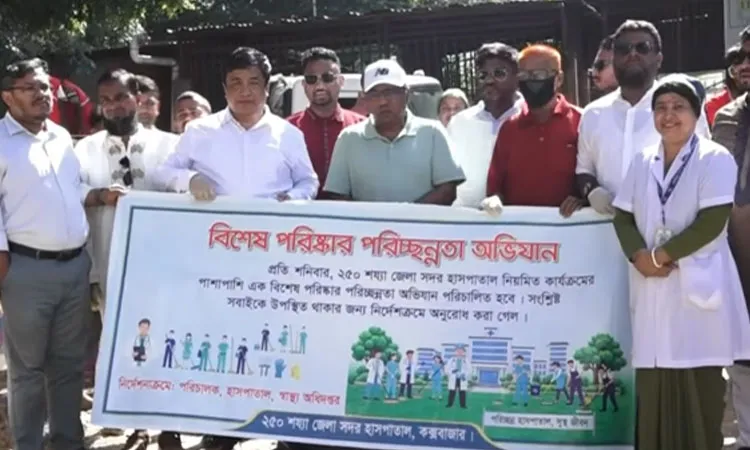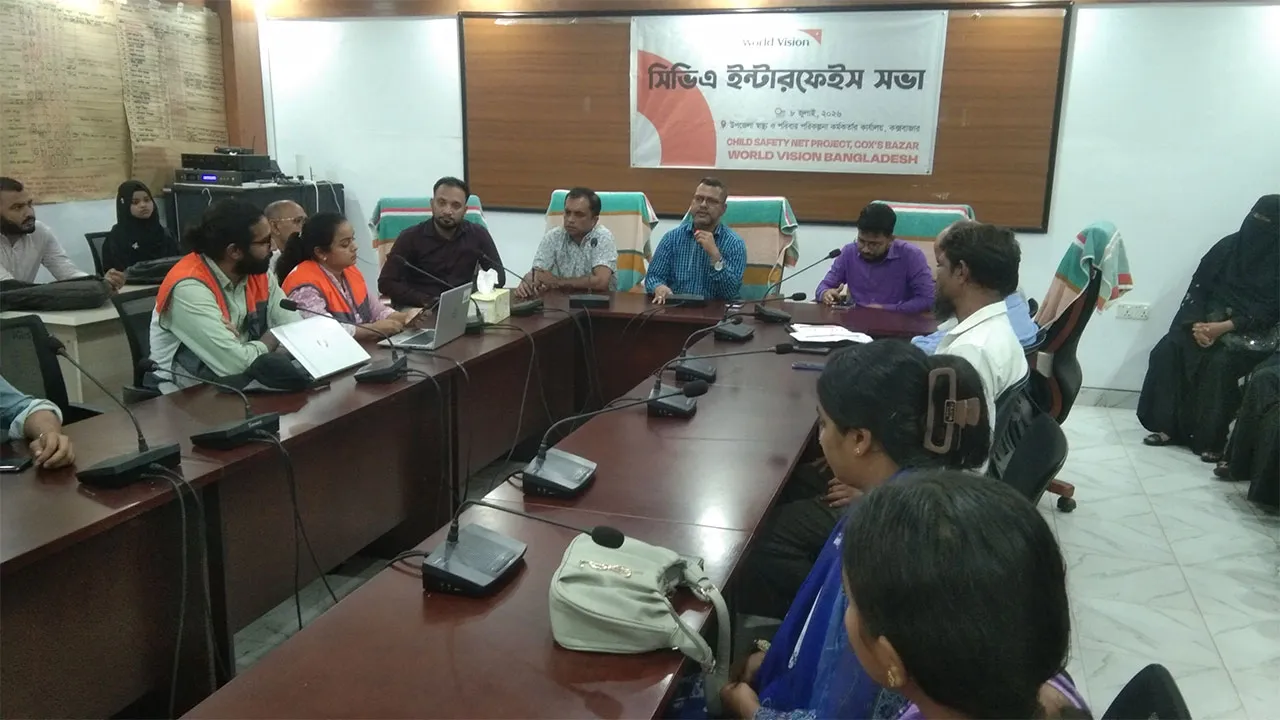
Community clinics remain a vital lifeline for rural healthcare in Bangladesh. To improve service quality and boost public engagement, a participatory action plan (interface) meeting was held on July 8 at the Cox’s Bazar Sadar Upazila Health and Family Planning Office. Organized by the Ministry of Health and Family Welfare alongside World Vision Bangladesh, the event focused on making grassroots healthcare more accessible.
Jayashree Purification, World Vision’s Campaign and Accountability Coordinator, presented the current status of local clinics and outlined development strategies. The meeting highlighted the success of four specific clinics operating under World Vision’s Child Safety Net Project: Sagarpar, Jumchhari, Odagarpara, and Gazir Daily.
Partha Pratim Bagchi, representing World Vision, emphasized their goal to strengthen local health systems using the Community Scorecard and Citizen Voice and Action (CVA) processes. These tools allow citizens to directly evaluate healthcare quality. "Accessible primary healthcare is the foundation of a healthy society," Bagchi noted, adding that public participation is vital for clinic survival.
Presiding over the meeting, Dr. Tito Chandra Shil, Sadar Upazila Health and Family Planning Officer, praised the collaborative effort. He stressed that clinics are more than ordinary buildings; they are a refuge for rural populations. Transforming them into trusted health hubs requires compassionate patient care and active community involvement.
Other speakers, including World Vision Coordinator Jaganmoy Prajes Biswas, Dr. Habibur Rahman, and Md. Saifur Rahman, echoed the need to build stronger relationships between service providers and patients.
Currently, 19 government-managed community clinics operate in Cox's Bazar Sadar, providing free treatments, maternal care, family planning, and emergency medicines. Through sustained monitoring and public participation, these clinics aim to serve as the robust backbone of rural healthcare.