- National
- Bangladesh
- Business
- International
- Sports
- Entertainment
- Politics
- Technology
- Life Style
- Religion
- Opinion
- FIFA World Cup 2026
Tuesday, 25 August 2026


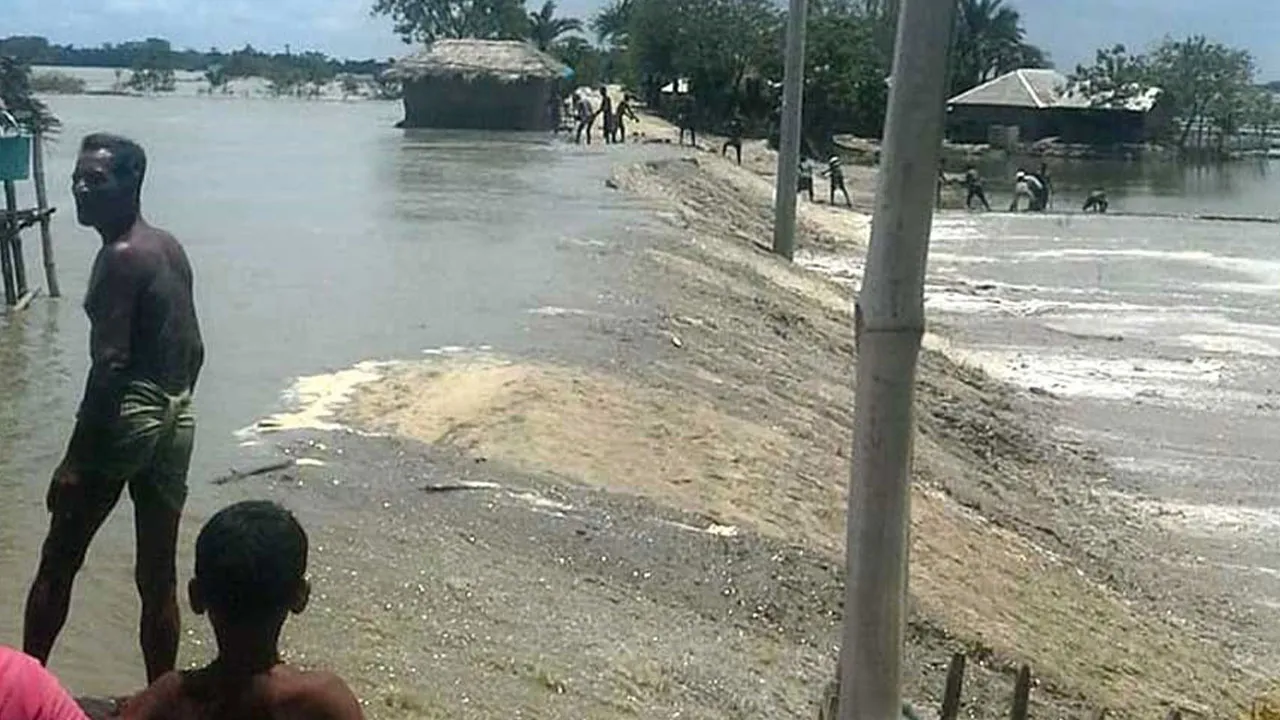
Millions in Bangladesh’s southwestern coastal districts—including Khulna, Bagerhat, and Satkhira—are fighting a desperate battle against severe climate impacts. Despite contributing little to global emissions, residents face a daily crisis driven by fragile embankments, intensifying cyclones, river erosion, and extreme salinity.
In Paikgachha and Koyra upazilas, the situation has escalated into a severe humanitarian disaster. Recurring cyclones like Sidr, Aila, and Remal have devastated the local economy. Vast agricultural lands are now barren due to saltwater intrusion, stripping thousands of their livelihoods.
Women and children bear the heaviest burden. Forced to use highly saline water, women are suffering from severe reproductive health issues, leading to alarming rates of hysterectomies. Meanwhile, many walk miles in extreme heat simply to fetch safe drinking water. Children face chronic diarrhea and malnutrition due to polluted water and soaring temperatures.
Local residents are rejecting temporary NGO relief. "I don't want alms; I want a durable embankment and potable water," says Fatema Begum, a resident of Soladana Union.
The coastal population's demands are clear: permanent, scientifically designed embankments to halt river erosion, reliable drinking water infrastructure, and alternative employment. For decades, temporary fixes have failed, washing away with the next tidal surge.
Without immediate, sustainable state intervention and direct access to global climate funds, millions risk becoming permanent climate refugees. The government must implement a long-term master plan to prevent this historic region from being wiped off the map.