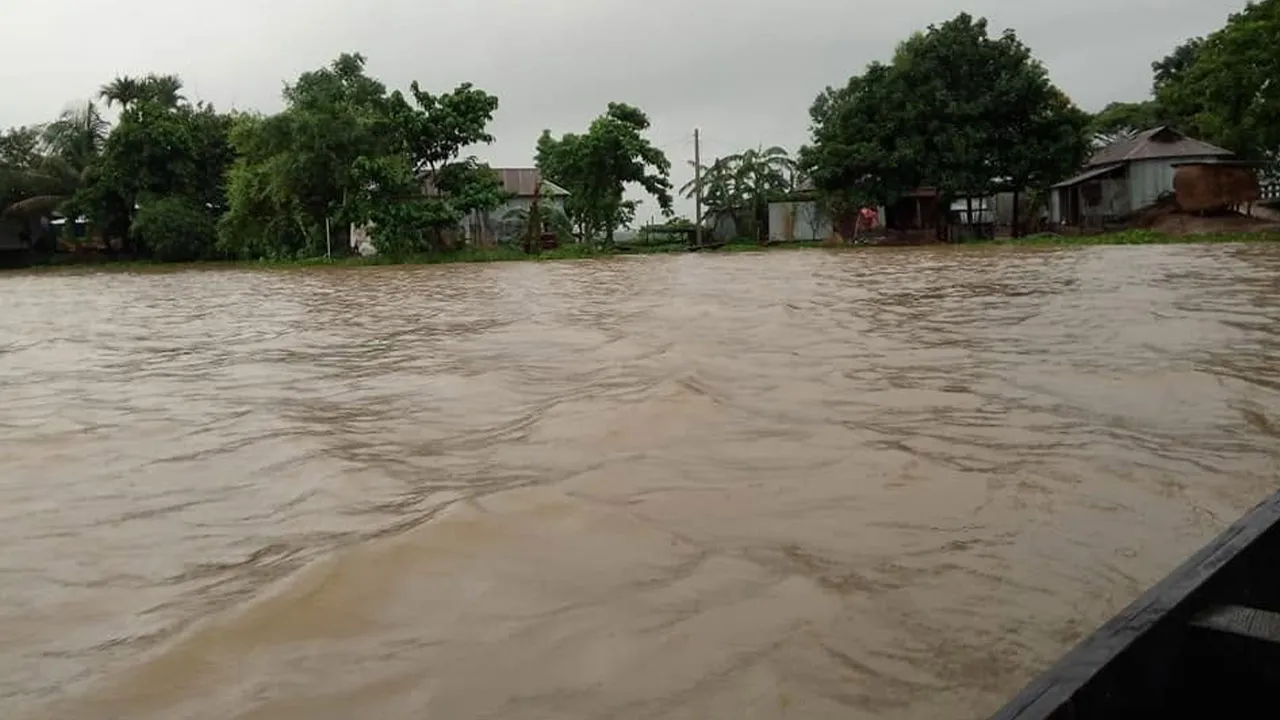
Continuous torrential rains and a Bay of Bengal depression have triggered a severe humanitarian crisis in Cox’s Bazar. Unprecedented flooding and landslides have claimed at least 25 lives, including 18 in the Ukhia Rohingya camps and two children in Chakaria. Over 100,000 people are currently stranded across 50 unions, with tidal surges rising six feet above normal levels.
The local meteorological office recorded a staggering 749 millimeters of rainfall over four days, maintaining local warning signal number 3 at the seaport. The extreme weather has crippled regional infrastructure: a vital bridge in Kutubdia collapsed, the Cox’s Bazar-Chittagong rail link is suspended, and St. Martin's Island is completely cut off, triggering an acute food crisis. Additionally, 8,000 fishing trawlers remain grounded.
Environmentalists and local experts warn that this is not solely a natural disaster, but a man-made crisis driven by unplanned development, aggressive hill cutting, and river encroachment. Blocked drainage routes and dilapidated coastal embankments have allowed rainwater and seawater to easily submerge homes, agricultural lands, and shrimp farms.
The district administration is actively responding. Deputy Commissioner A. Mannan confirmed that control rooms are open, and executive magistrates are working to evacuate high-risk residents to cyclone centers. However, approximately 100,000 Rohingya refugees and 20,000 local families living on hill slopes remain highly vulnerable. Experts are urging the government to move beyond temporary relief and implement strict environmental protections and climate-resilient infrastructure.