- National
- Bangladesh
- Business
- International
- Sports
- Entertainment
- Politics
- Technology
- Life Style
- Religion
- Opinion
Wednesday, 15 April 2026

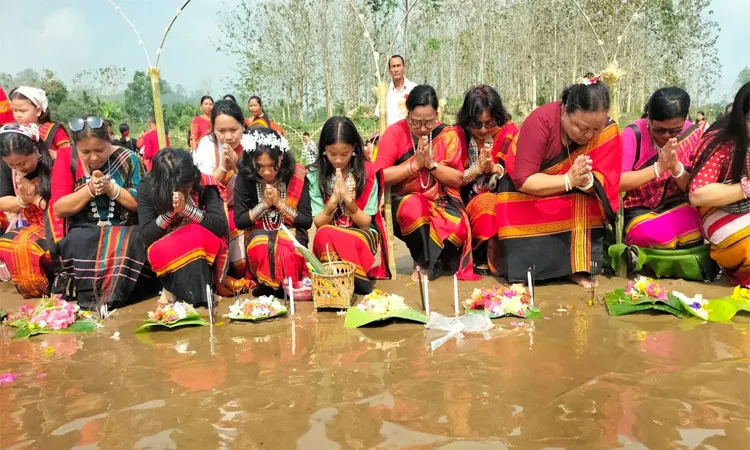
The Chittagong Hill Tracts have transformed into a vibrant tapestry of color as ethnic communities welcome the New Year. From the Tripura community’s Hari Baisu and the Marma’s Sangrai to the Chakma’s Biju and the Santal’s Pata Baha, a collective festive spirit has gripped the region.
The three-day celebrations, spanning the final two days of Chaitra and the first day of Baishakh, officially began Monday. For the Tripura community, the 29th of Chaitra marks the start of Hari Baisu.
In Khagrapur, women adorned in traditional hand-woven 'Rinai' and 'Risa' gathered at dawn. Organized by the Salkatal Club and local residents, the atmosphere was electric. Following age-old traditions, men, women, and children flocked to riverbanks to offer flowers—including Madhabilata, Alakananda, and Jaba—to the Goddess Ganga. The ritual symbolizes a prayer to wash away the sorrows of the past year and usher in peace.
"Hari Baisu is more than a ritual; it is our grandest social reunion," said Bashundhara and Benuka Tripura, who participated in the flower-floating ceremony.
Srijita Tripura, another participant, added: "We worship with flowers, incense, and lamps for the prosperity of the world. We also float small hand-woven cloths."
According to Chameli Tripura, a lead organizer, floating these cloths is a symbolic plea for divine blessing to improve their weaving skills and dexterity in the coming year.
Meanwhile, the Bangladesh Tripura Kalyan Sangsad hosted a colorful program in the Paltanjoy area. President Kamal Vikas Tripura noted, "Vaisu is the heartbeat of our culture—a blend of social, cultural, and religious heritage."
The festivities extended beyond the Tripura community. In Khagrachari town, the Marma Oikya Parishad held a vibrant rally for the Sangrai festival. In Panchari, the Santal community celebrated Pata Baha with traditional dances and river rituals, marking a unified farewell to the old year across the hills.
Comment