


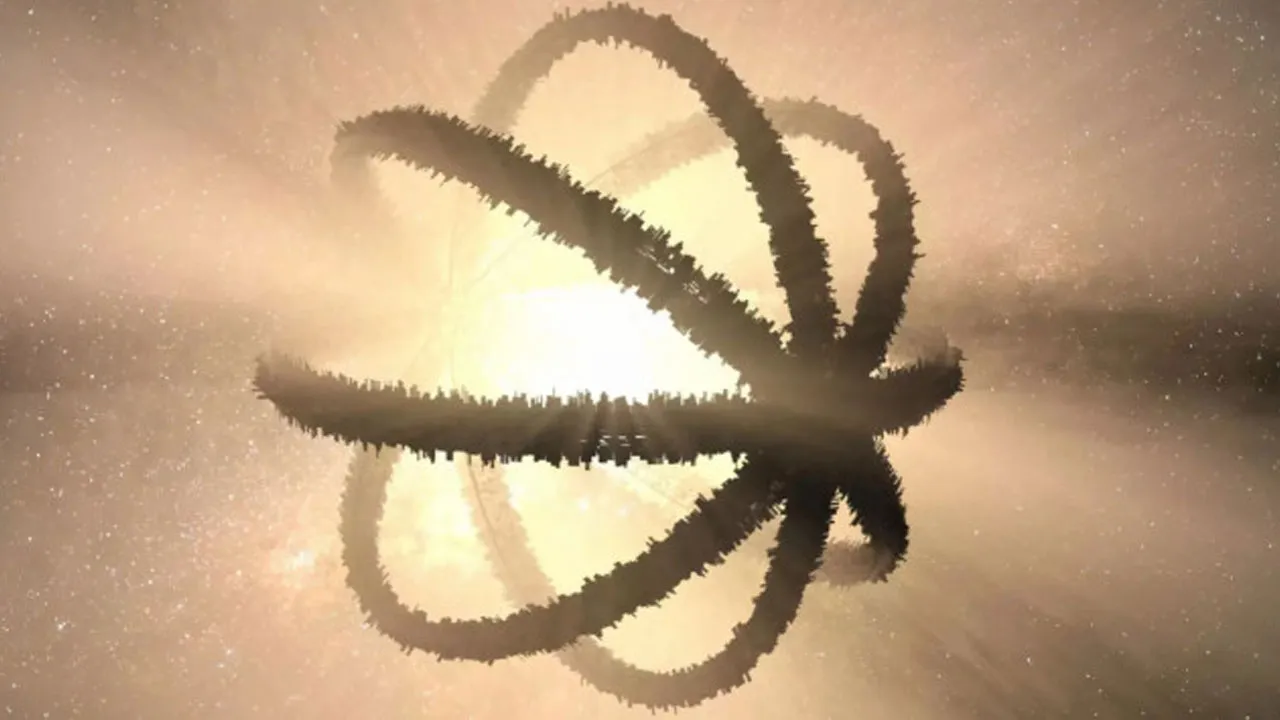
Scientists searching for advanced extraterrestrial life suggest that some of the coldest objects in our galaxy may not be stars, but massive energy-harvesting structures. A new study by Amirnezam Amiri of the University of Arkansas, scheduled for publication in the journal Universe, explores how these "Dyson swarms" would appear to modern telescopes.
Unlike a solid shell, a Dyson swarm is a vast network of independent collectors designed to capture a star's energy. The research identifies red dwarfs and white dwarfs as the best candidates for these structures. These stars are small and long-lasting, making it easier for a civilization to build and maintain a swarm over billions of years.
According to the study, such structures would drastically alter a star’s signature. Instead of emitting visible light, a Dyson swarm absorbs energy and re-emits it as infrared heat. Consequently, an object that should be 3,000 Kelvin might appear as cold as 50 Kelvin—a temperature at which no known natural stars exist. These structures would also lack the "dusty" infrared signatures typically found around natural stars.
The James Webb Space Telescope is uniquely equipped to find these objects due to its advanced infrared sensors. While a 2024 search identified seven potential candidates, further investigation is required to distinguish them from natural phenomena, such as distant black holes. Though no megastructures are confirmed, the study provides a new roadmap for identifying signs of advanced alien technology.

