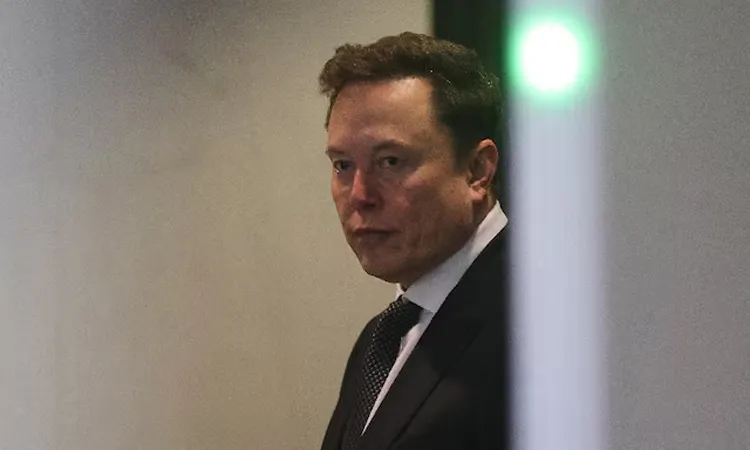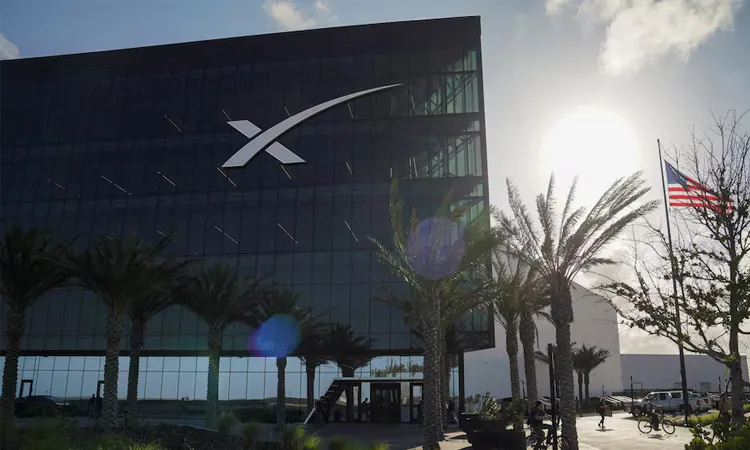
Under Elon Musk's leadership, the rocket firm aims for a groundbreaking $1.77 trillion valuation in its initial public offering (IPO). If accomplished, this would position SpaceX as the seventh-largest publicly traded firm in the U.S.
Nonetheless, the high cost is attracting attention on Wall Street. In 2025, SpaceX reported a net loss of $4.94 billion. As per Reuters estimates, its aimed valuation stands at an astonishing 94.5 times its sales in 2025. In contrast, Tesla is presently valued at merely 16.7 times its revenue.
Supporters of Musk claim that his history makes purchasing SpaceX shares a secure long-term investment. John Plassard, an investment strategist at Cité Gestion, remarked that he is willing to pay a 20% to 30% premium for a well-managed Musk company in comparison to its competitors.
However, independent analysts caution that the fundamental financials render the investment extremely risky.
"The basics are quite challenging." "Without high expectations, there wouldn't be an IPO happening here," stated Ed O'Gorman, CEO of River Wealth Advisors. Skeptics contend that the IPO valuation presumes years of perfect performance and swift expansion that the company might find difficult to achieve. Emphasizing this disparity, Morningstar analyst Nicolas Owens recently assessed SpaceX's worth at $780 billion—under 50% of its goal.
A significant obstacle to the company's valuation is its dependence on untested technology, especially in artificial intelligence and space systems.
SpaceX intends to create orbital space data centers, a notion that is mostly speculative. "The physics remains the greatest uncertainty of it all," stated Franco Granda, a senior research analyst at PitchBook. "How will you assess something that you cannot perceive or evaluate?"
Additionally, the firm's AI integration prominently includes Grok, a chatbot created by Musk's xAI. Analysts observe that Grok remains considerably behind well-established rivals such as OpenAI and Anthropic, providing minimal concrete benefits to SpaceX's current profit margins.
Market analysts are extensively speculating on a potential merger between Tesla and SpaceX in the future. Michael Hewson, a leading market analyst at iForex, proposed that after a thriving IPO, Tesla might ultimately be integrated into SpaceX to streamline manufacturing processes for upcoming space missions.
In contrast to Musk's previous endeavors—like the 2016 merger with SolarCity or the Twitter purchase that briefly impacted Tesla's stock—investors appear to be less worried about Musk's potential distraction this time. Since SpaceX submitted its IPO application, Tesla's stock has risen by 10%.
For numerous retail investors, the approach is to exercise patience. Alexandra Merz, a committed Tesla investor, expressed her intention to retain her Tesla shares instead of selling them for SpaceX stock. She chooses to remain invested in the automaker "with the belief that a merger is forthcoming."
This week's notable public offering from SpaceX will assess the "Elon premium," the steadfast investor assurance that previously propelled Tesla into a significant player in the stock market.