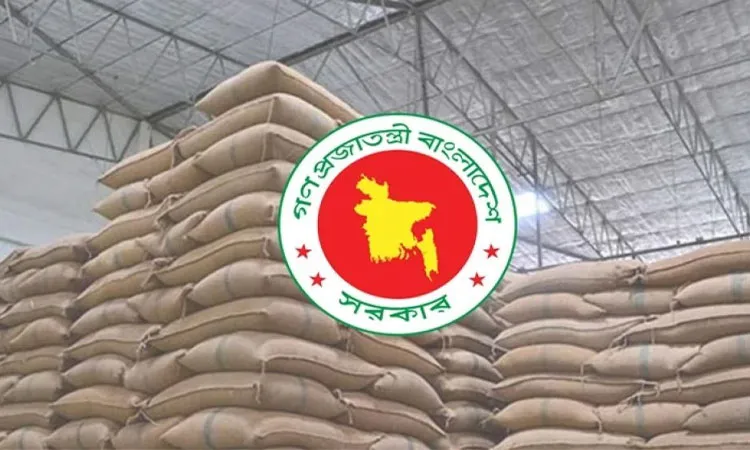
To strengthen national food security the Bangladesh government plans to expand its public food grain storage capacity to 3.4 million metric tonnes over the next five years.
Currently the nation's storage capacity has already grown from 2.4 million to 2.7 million tonnes. Despite maintaining reserves well above the required safety threshold officials emphasize the need for continued expansion to meet the growing demands driven by population increases and broader social safety net programmes.
As of July 23 Bangladesh’s total food grain stock stood at 2.37 million tonnes exceeding the current safe reserve benchmark of 1.35 million tonnes by over 1.02 million tonnes. These robust reserves primarily consist of 1.96 million tonnes of rice and nearly 296,000 tonnes of wheat. Furthermore, the government plans to increase the official safe food reserve benchmark from 1.35 million to 1.6 million tonnes to better prepare for future demands and emergency requirements.
Recent procurement drives have contributed heavily to this surplus. Under the ongoing FY2025-26 Boro season the government successfully secured 1.37 million tonnes of paddy and rice by late July. Food Ministry officials confirm these stocks and procurements are being closely monitored to stabilize market prices maintain steady consumer supplies and support vital public distribution initiatives.
Backed by substantial stock and active capacity upgrades, authorities assert that Bangladesh’s current food security situation remains "highly satisfactory".