



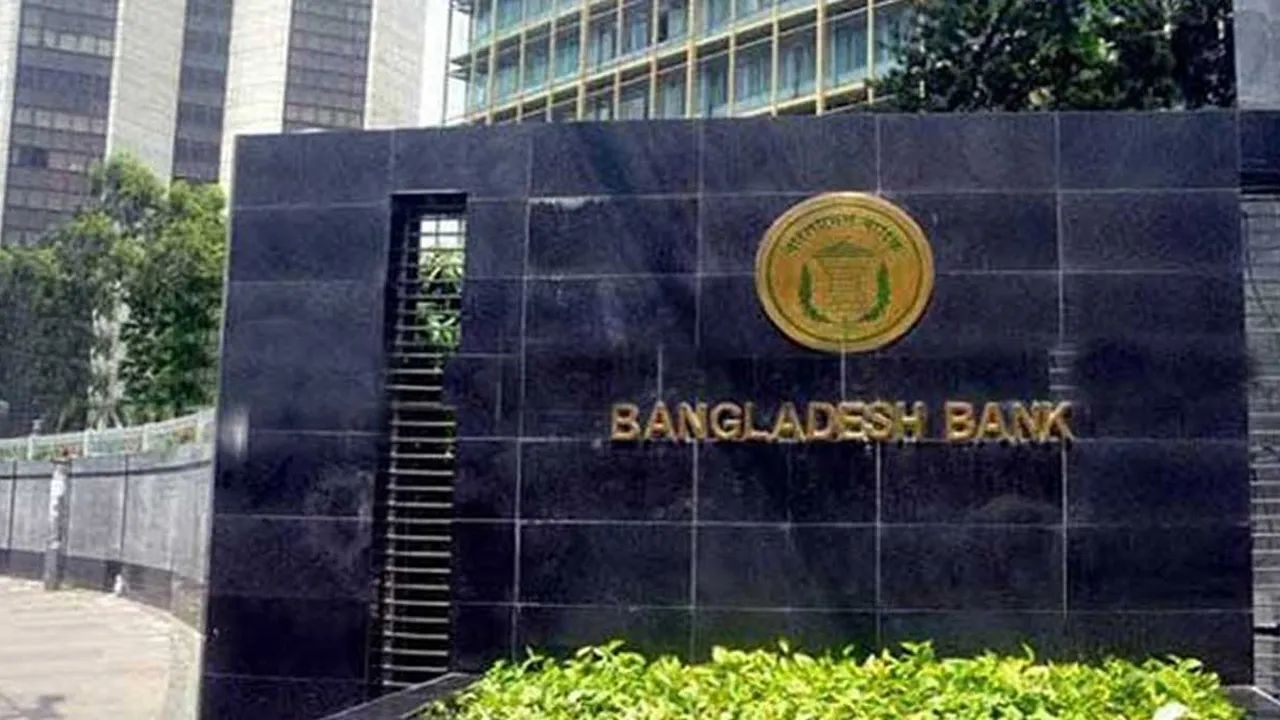
Bangladesh Bank has introduced short-, medium- and long-term plans to reduce defaulted loans, strengthen loan recovery and improve governance in the banking sector. The initiatives aim to reinforce the country’s banking system by accelerating recoveries, restoring discipline in loan management and promoting a culture of regular repayment.
The plans include closer monitoring of banks’ recovery efforts, improvements in credit risk management, incentives for borrowers who repay loans on time and legal reforms to strengthen governance in the banking sector.
The initiatives were outlined in a report presented at the fourth meeting of the Parliamentary Standing Committee on the Ministry of Finance.
At the meeting, held recently at the Jatiya Sangsad Bhaban under the chairmanship of committee chairman and Member of Parliament Mushfiqur Rahman, participants emphasised the importance of transparency, accountability and financial stability in financial institutions, particularly banks.
Under its plan, Bangladesh Bank will hold quarterly discussions with the senior management of banks whose classified loan ratios exceed 10% over the next year.
The discussions will identify obstacles to loan recovery and require the banks concerned to prepare specific action plans to address them.
Progress in recovering loans from the top 20 defaulted or classified borrowers will also be reviewed regularly at bankers’ meetings.
The central bank plans to issue special guidelines on loan recovery strategies for banks with high classified loan ratios and update its existing credit risk management guidelines.
To improve transparency and accountability in loan management, Bangladesh Bank plans to introduce loan classification and provisioning under the Expected Credit Loss (ECL) approach in line with International Financial Reporting Standard 9 (IFRS 9).
The system is expected to help banks estimate potential credit losses in advance and manage lending risks more effectively.
The legal implications of publishing lists of defaulting and wilful defaulting borrowers are also being reviewed.
Jean Pesme, the World Bank’s division director for Bangladesh and Bhutan, said the discussions were important for gradually ending the prevailing practice of granting concessions in the banking sector.
He also called for further measures to accelerate the resolution of defaulted loans. According to him, incentives should be designed to encourage both banks and borrowers to seek effective solutions.
Under its medium-term plan, Bangladesh Bank will formulate a policy over the next two to three years to provide special incentives to bank officials who play an effective role in recovering defaulted loans.
The initiative aims to encourage the officials concerned to become more proactive and speed up recovery efforts.
The central bank will also review and update existing policies for identifying and rewarding good borrowers who repay their loans regularly. The measures are intended to encourage timely repayment and foster a culture of responsible borrowing and repayment across the banking sector.
Over the next four to five years, Bangladesh Bank plans to strengthen banks’ overall loan management frameworks.
The initiative will focus on establishing discipline at every stage of lending, including loan approval, monitoring, recovery and classification, while addressing structural weaknesses that contribute to loan defaults.
Rather than relying solely on recovery efforts after loans become overdue, the central bank aims to establish systems that identify and control credit risks from the outset.
The need for such reforms has become more pressing as the volume and proportion of defaulted loans have increased in recent periods.
According to Bangladesh Bank data, defaulted loans stood at Tk 581,237.56 crore as of June 30, accounting for 31.41% of total outstanding loans.
As of March 31, the amount was Tk 564,105.64 crore, or 30.92% of total loans. This means defaulted loans increased by Tk 17,131.92 crore in three months, while their share of total loans rose by 0.49 percentage points.
Alongside immediate recovery measures, work is progressing to modernise the legal and institutional framework governing the banking sector.
A draft of the Bank Company (Amendment) Act, 2026, has been prepared to strengthen governance. The draft was revised following decisions taken at an inter-ministerial and stakeholder meeting on April 22 and instructions issued by the Financial Institutions Division on April 26.
The revised draft was sent to the Financial Institutions Division on August 24. The latest inter-ministerial and stakeholder meeting on the matter was held on September 20.
An initiative is also underway to formulate the Money Loan Court (Amendment) Act, 2026, to make loan recovery procedures more effective.
An inter-ministerial meeting has already been held at the Law and Justice Division of the Ministry of Law, Justice and Parliamentary Affairs to discuss modernising the legislation.
Earlier, the Financial Institutions Division formed a committee led by an additional secretary. The committee prepared a draft proposal and sent it to the Law and Justice Division for necessary action.
Another committee, also led by an additional secretary of the Financial Institutions Division, is currently working on a revised draft of the law.
In addition, work is underway to enact the Distressed Asset Management Act, 2026, to improve the recovery of defaulted loans.
The authorities are also working to modernise the existing Bankruptcy Act of 1997 by introducing the Bankruptcy and Insolvency Proceedings Act, 2026.
The proposed legislation aims to align the insolvency system with international best practices, strengthen the overall bankruptcy framework and help financial institutions manage credit risks more effectively.
With assistance from the International Finance Corporation (IFC), a member of the World Bank Group, the English draft of the new bankruptcy law has been finalised in a modern legal framework.
The authorities have requested IFC assistance in translating the draft into Bangla. Once the Bangla version is finalised, it will be sent to the Financial Institutions Division for the next steps.
If implemented, Bangladesh Bank’s initiatives could strengthen oversight of loan recovery, improve discipline in lending and encourage borrowers to repay loans regularly. Modernising the legal framework and improving credit risk management could also help reinforce governance and financial stability across the banking sector.

