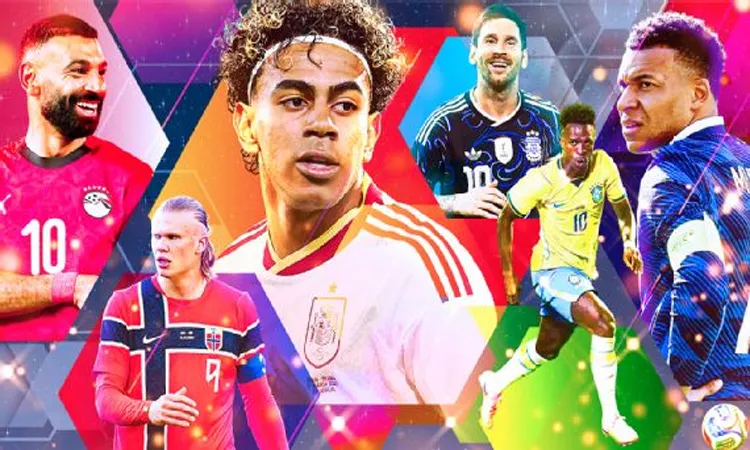
The 2026 FIFA World Cup will undoubtedly dictate the winner of the Ballon d'Or. Historically, voters lean aggressively toward the standout player of the World Cup-winning team. However, international football is vastly different from the club level, where players spend 90% of their professional careers.
As the tournament kicks off this Thursday, evaluating players based on their recent club performances offers a far more accurate measure of who truly impacts the game at the highest level.
The Elite Core and Modern Defenders
Modern football demands versatility. Players like Arsenal’s William Saliba, who rarely makes errors and Barcelona’s Pedri, who combines ball security with elite chance creation, guarantee a baseline of team performance. Similarly, modern "hybrid" defenders like Joško Gvardiol and Jules Koundé who push forward like fullbacks but defend as elite center-backs have become indispensable. Meanwhile, veterans like Luka Modrić and Joshua Kimmich continue to dictate the pace of the game in midfield, proving that exceptional passing metrics remain invaluable.
The Individual Superstars
A distinct tier features the game’s ultimate match-winners: Lionel Messi, Kylian Mbappé, Erling Haaland, Vinícius Júnior and Jude Bellingham. While they are undeniably the most talented individuals on the planet, fitting them into a cohesive, modern two-way system is tactically complex.
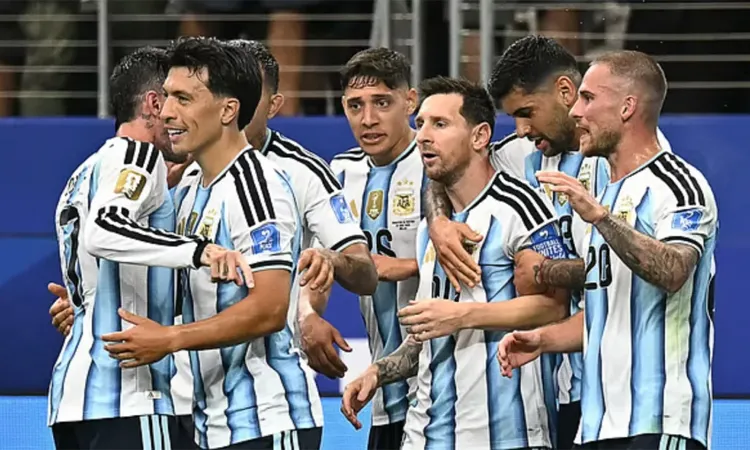
Haaland guarantees goals, but his limited involvement in possession requires tactical sacrifices elsewhere. Similarly, Mbappé remains a lethal forward, yet his lack of defensive pressing limits his team's tactical flexibility. Messi, at 38, remains the greatest playmaker in history, but Argentina must now build their entire tactical approach around accommodating his declining mobility.
These players can single-handedly win matches, but they often require the team to bend to their style.
The Ultimate System Enhancers
The most valuable players in modern football are those who elevate their team's ceiling without demanding tactical compromises. Wingers like Bukayo Saka, Michael Olise and 18-year-old Spanish sensation Lamine Yamal embody this. They drop deep to progress the ball, create chances, score and aggressively press opponents. Arsenal’s Martin Ødegaard and Saka, for instance, generate world-class attacking numbers while serving as frontline defenders.
The Number One
Currently, the most complete player in the world heading into the tournament is Ousmane Dembélé.
Since Mbappé departed for Real Madrid, Dembélé has thrived as the focal point of Paris Saint-Germain’s attack. Symmetrical with both feet, he creates unpredictable angles that break down set defenses. Crucially, under manager Luis Enrique, Dembélé has evolved into one of the best-pressing forwards in Europe.
This combination of two-footed brilliance and tireless off-the-ball work rate is the primary reason PSG transformed into an elite pressing unit and the best club team in the world making Dembélé the ultimate difference-maker at the 2026 World Cup.