- National
- Bangladesh
- Business
- International
- Sports
- Entertainment
- Politics
- Technology
- Life Style
- Religion
- Opinion
Sunday, 05 April 2026

As the 13th National Parliamentary Election draws closer, the political landscape in Dinajpur-5 (Phulbari–Parbatipur) is becoming increasingly complex.
For decades, the Awami League was the BNP’s main rival in this constituency. However, due to the current political situation, the contest has taken a different shape this time.
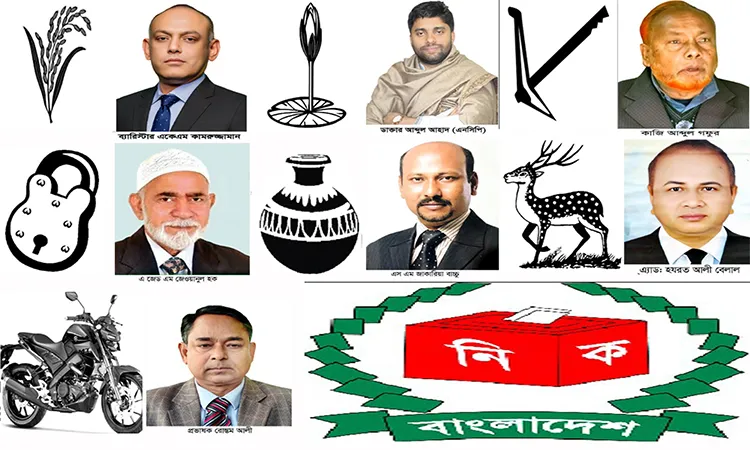
A total of seven candidates are contesting the seat. Barrister AKM Kamruzzaman Zaman, legal adviser to BNP Chairperson Tarique Rahman, is contesting as the BNP-nominated candidate with the sheaf of paddy symbol. Dr Abdul Ahad, a leader of the National Citizen Party (NCP), is running as the candidate of the 10-party alliance with the shapla bud symbol.
The Jatiya Party candidate is Kazi Abdul Gafur, president of Parbatipur Upazila Jatiya Party, contesting with the plough symbol.
Among the independent candidates, Lecturer Rostam Ali is contesting with the motorcycle symbol, while Advocate Hazrat Ali Belal is running with the deer symbol.
In addition, two BNP rebel candidates are in the race: AZM Rezwanul Haque, a BNP central executive member, contesting with the lock symbol, and SM Zakaria Bachchu, a Parbatipur Upazila BNP member, contesting with the pitcher symbol. Although the party recently expelled both for violating organisational discipline, their presence continues to influence the campaign.
Field-level observations suggest that while BNP is currently ahead, internal divisions pose a serious challenge. Sensing an opportunity, the Jamaat–NCP alliance has intensified its grassroots campaign, especially at village and ward levels, aiming to position itself as a viable alternative for voters dissatisfied with BNP’s internal disputes.
Local political sources say disagreements among BNP leaders over nominations and leadership roles have weakened coordination. Despite disciplinary action against rebel candidates, confusion remains at the grassroots level.
Political analysts warn that BNP must adopt a more strategic and united approach to maintain its lead. Otherwise, its advantage could erode. At the same time, analysts say the Jamaat–NCP alliance could spring a surprise if it successfully mobilises protest votes.
Voter interest in the election is rising. Discussions now centre on who can effectively contribute to local development and play a meaningful role in national governance. Local issues and regional calculations are also shaping voter choices.
The Dinajpur-5 constituency comprises Phulbari and Parbatipur upazilas, with two municipalities and 17 unions. The total number of voters stands at 471,220, including 235,030 male, 236,187 female, and three transgender voters.
Phulbari Upazila, consisting of one municipality and seven unions, has 156,210 voters, while Parbatipur Upazila, with one municipality and 10 unions, has 314,710 voters.
Of the seven candidates, six are from Parbatipur Upazila and one from Phulbari Upazila.
Due to geographical connectivity, three major unions of Parbatipur are closely linked with Phulbari Municipality. In past elections, this factor contributed to members of parliament being repeatedly elected from Phulbari. Whether that trend will continue or be broken in this election is now a key point of public attention.
Comment