- National
- Bangladesh
- Business
- International
- Sports
- Entertainment
- Politics
- Technology
- Life Style
- Religion
- Opinion
Tuesday, 26 May 2026

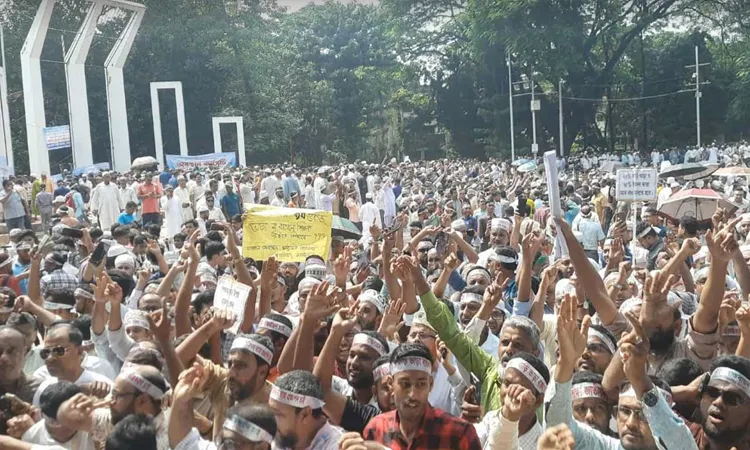
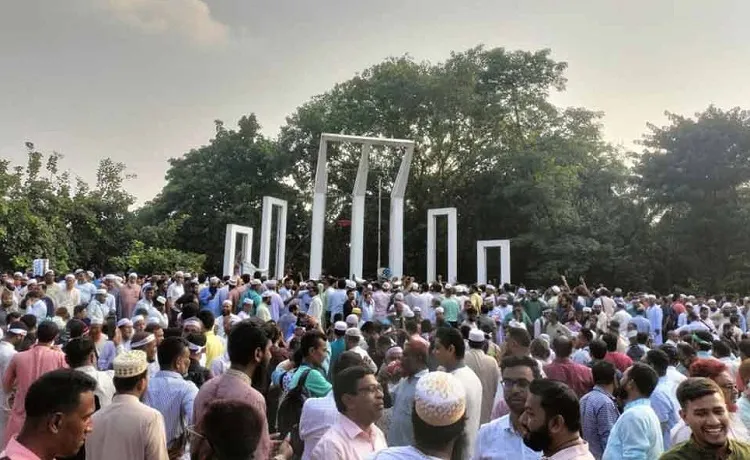
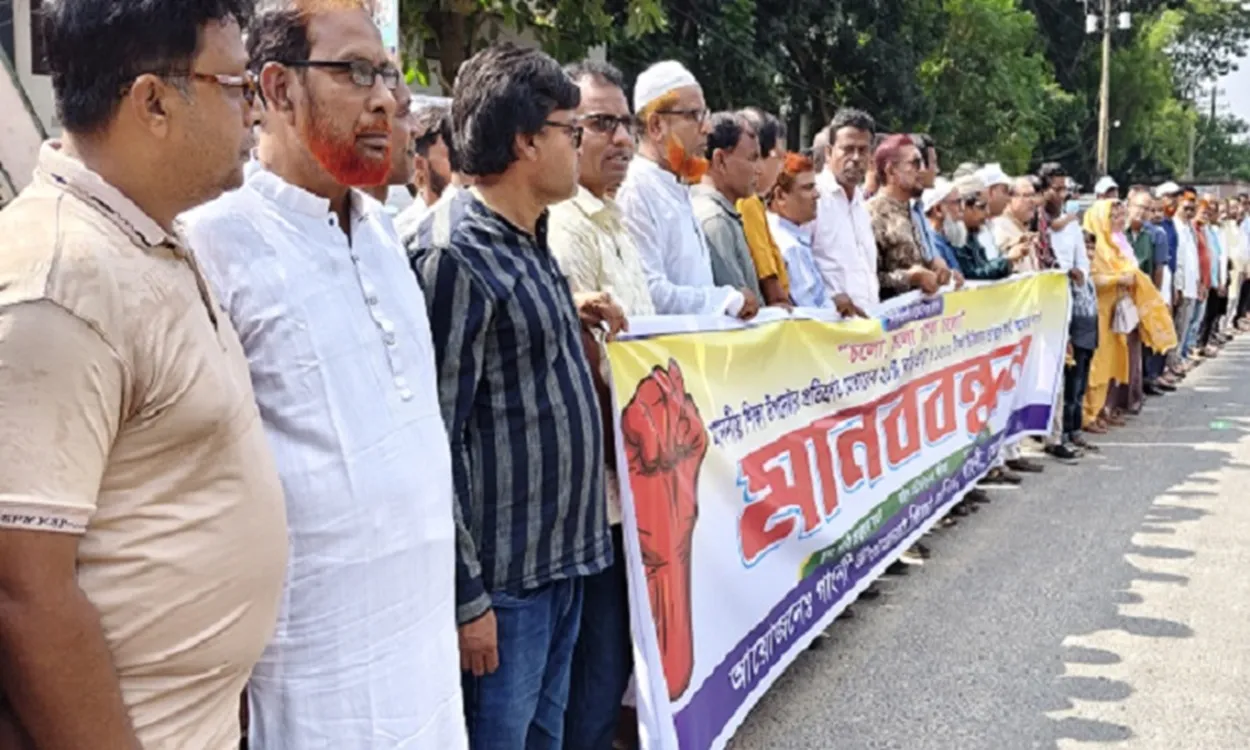
The ongoing protest by MPO-listed (Monthly Pay Order) non-government teachers and staff demanding increased housing and medical allowances entered its third consecutive day on Tuesday. Thousands of educators gathered at the Central Shaheed Minar, preparing to launch their announced "March to the Secretariat" at noon.
The demonstration, organized under the banner of "Jatioyakoron Prottashi Shikkhak-Kormochari Jote" (Alliance of Teachers Expecting MPO Nationalization), demands:
*20% housing allowance based on basic salary,
*Tk 1,500 monthly medical allowance, and
*75% festival bonus for support staff.
Speaking from the Central Shaheed Minar, the alliance's Member Secretary Principal Delwar Hossain Azizi said,
"We will not leave the streets until the official circulars are issued. Today, we march to the Secretariat to press our demands."
The teachers began their sit-in on Sunday in front of the National Press Club, but later moved to the Shaheed Minar following police requests. However, a group of teachers remained at the Press Club, prompting police to intervene with sound grenades, water cannons, and batons to disperse them—leading to widespread condemnation of what protesters are calling “police aggression.”
In protest, a nationwide work stoppage has been observed since Monday across MPO-affiliated private schools and colleges.
Earlier, on September 30, the government announced a modest Tk 500 increase in the housing allowance, raising it from Tk 1,000 to Tk 1,500. However, this move was rejected by the teachers, who launched a fresh wave of protests after the decision was made public on October 5.
On October 6, the Ministry of Education forwarded a new proposal to the Finance Division, suggesting a raise to Tk 2,000 or Tk 3,000 in housing allowance. But the teachers remain firm in their demand for 20% of their basic salary as housing allowance.
Currently, MPO-listed teachers receive salaries under the National Pay Scale, along with Tk 500 in monthly medical allowance, and two festival bonuses at 50% of their basic salary each.
The teachers insist these benefits are not adequate to cope with rising living costs and demand parity with their public sector counterparts.