The United States launched strikes against Iran on Tuesday after President Donald Trump said Tehran had shot down a US Army Apache helicopter in the Strait of Hormuz, raising fresh doubts over peace talks and straining a fragile ceasefire.
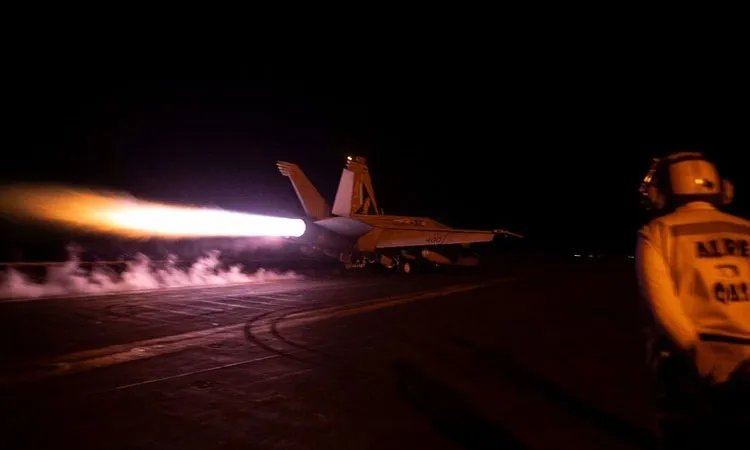
US Central Command (CENTCOM) said its forces struck Iranian air defence systems, ground control stations, and surveillance radar sites near the strait using precision munitions from Air Force and Navy fighter jets. The operation began at 5:00 pm ET and ended just before 9:00 pm ET. CENTCOM called it a "proportional response" to recent attacks on US forces and commercial shipping.
"I believe the response should be very strong, very powerful — and that's what this one is," Trump told ABC News.
Iran's state media reported that Qeshm island and the port city of Sirik were struck. Explosions were also heard near Bandar Abbas and Jask county. Some US bases in the region were targeted in response, Iran's top military command, Khatam al-Anbiya, said. Iran's Revolutionary Guards claimed they attacked the US Fifth Fleet in Bahrain with drones and threatened "more severe responses." Bahrain said its air defences repelled the attacks.
The Apache was downed by a one-way Iranian attack drone, a US official said on condition of anonymity. Both pilots were rescued by a Navy surface drone and were uninjured. Trump described the incident as "not a big deal" in a separate interview, though CENTCOM said the pilots were in "stable condition" — a more cautious description.
Iran's Foreign Minister Abbas Araqchi said Iran would "leave no attack or threat unanswered." Earlier he suggested that foreign forces in the region risked being caught in accidents or crossfire, and called for their withdrawal.
Iran's Islamic Revolutionary Guard Corps (IRGC) said it subsequently launched attacks on 21 US military targets at air and naval bases across the region, including Al-Azraq base in Jordan, where it claimed to have destroyed F-35 hangars and a command centre. Jordan said it intercepted five Iranian missiles, with no casualties or damage reported.
The escalation clouds already-difficult efforts to broker a broader peace deal. Trump has said Iran and the US are close to an agreement, though there has been little visible progress since a ceasefire took effect in early April. A senior White House official said the strikes did not change the status of negotiations, telling Politico: "Nothing changes where the deal stands right now."
In a parallel front, Israel struck the port city of Tyre in southern Lebanon, killing at least eight people — the deadliest strike on the city since fighting there erupted in early March. Israel has refused to halt its campaign against Hezbollah, a condition Tehran has linked to any peace deal with Washington.
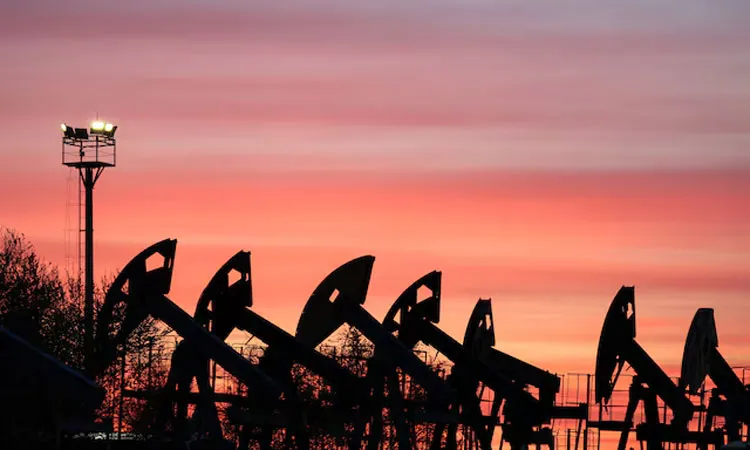
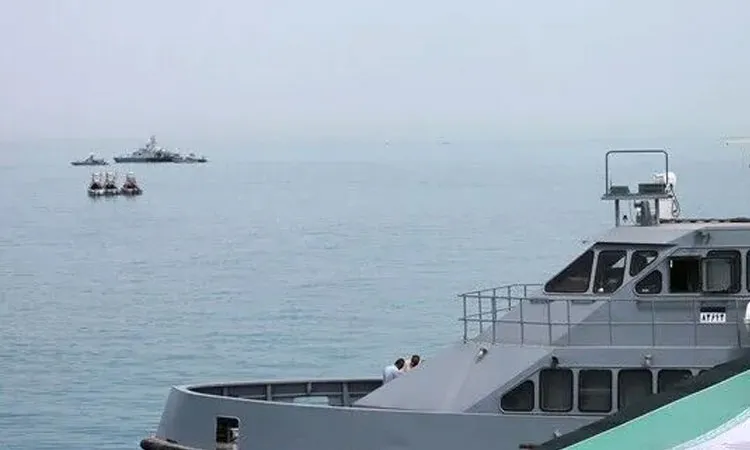
Iran continues to block most shipping through the Strait of Hormuz, which before the war carried roughly one-fifth of the world's crude oil and LNG. Washington has imposed its own blockade on Iranian ports. US Energy Secretary Chris Wright said ship traffic through the strait is rising "very meaningfully," but cautioned it would take many months to return to normal.