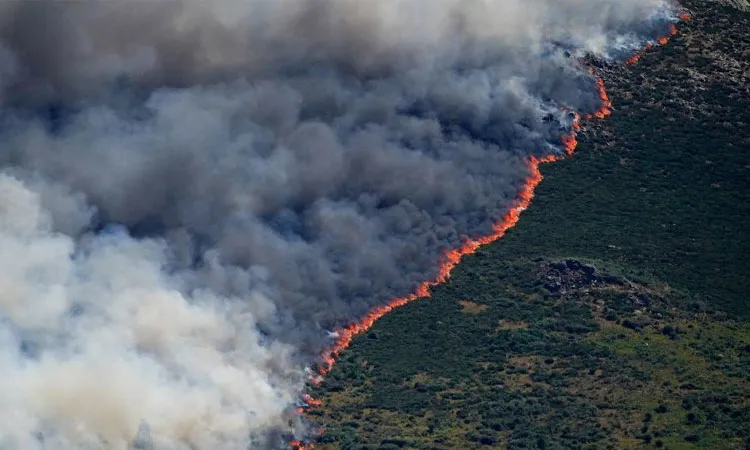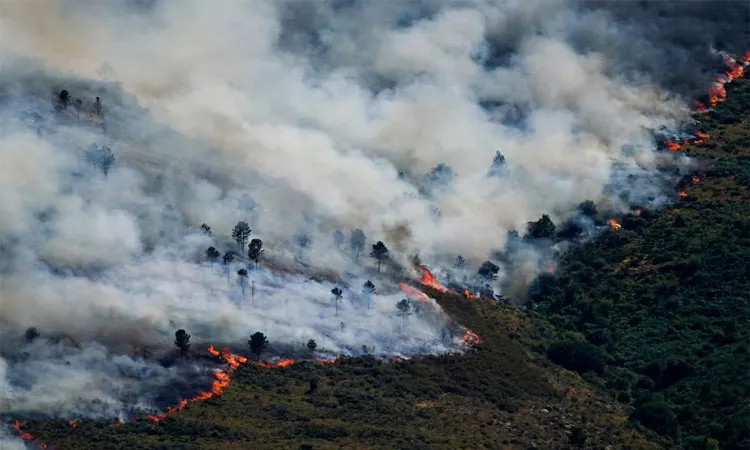
Raging wildfires fueled by searing heatwaves and strong winds have burned tens of thousands of hectares across southwestern Europe forcing over 140,000 people to evacuate their homes in Spain and France.
In Spain, raging blazes across the Community of Madrid and neighboring Ávila province have burned nearly 25,000 hectares impacting more than 63,000 residents. Over 35,000 people have been evacuated while thousands more remain confined to their homes. As multiple fires converged west of Madrid destroying dozens of homes and forcing the evacuation of a NASA communications complex Spain declared its first-ever national emergency over a wildfire to unlock federal emergency funding.
Visiting the affected regions, Spanish Prime Minister Pedro Sánchez warned that conditions remain highly unstable despite slight temperature drops. Over 130,000 hectares have burned across Spain so far this year also far exceeding the decade’s annual average. Spanish authorities have arrested one suspect for allegedly triggering the Ávila fire through improper machinery use during high-risk conditions.
Meanwhile, in southwest France, authorities ordered massive evacuations across the Atlantic coast, including the tourist hub of Cap Ferret. Over 110,000 people with many summer tourists fled by land and water as self-sustaining convective fires swept through more than 14,000 hectares of pine forest, destroying over 100 homes. French President Emmanuel Macron mobilized military forces to assist emergency personnel, while Interior Minister Laurent Nuñez warned that advancing flames threaten the broader Bordeaux metropolitan area.
Both nations have requested emergency aid from the European Union, with Greece and Croatia dispatching specialized firefighting aircraft. Climate scientists emphasize that human-driven climate change is intensifying heatwaves and drought across Europe, creating tinder-dry conditions that allow fires to spread rapidly and strain national resources.