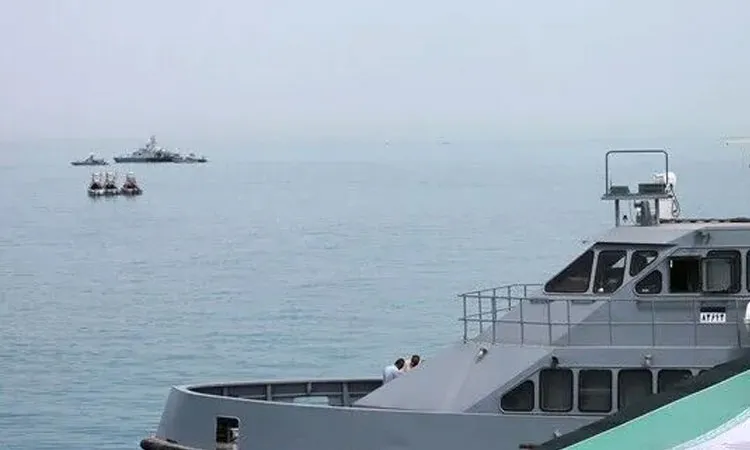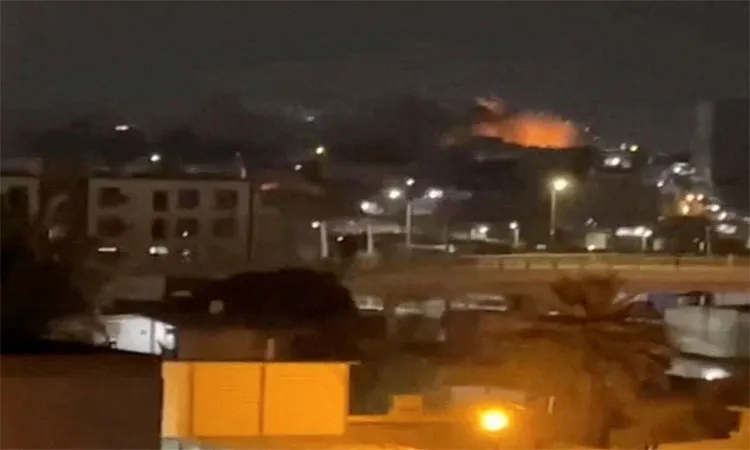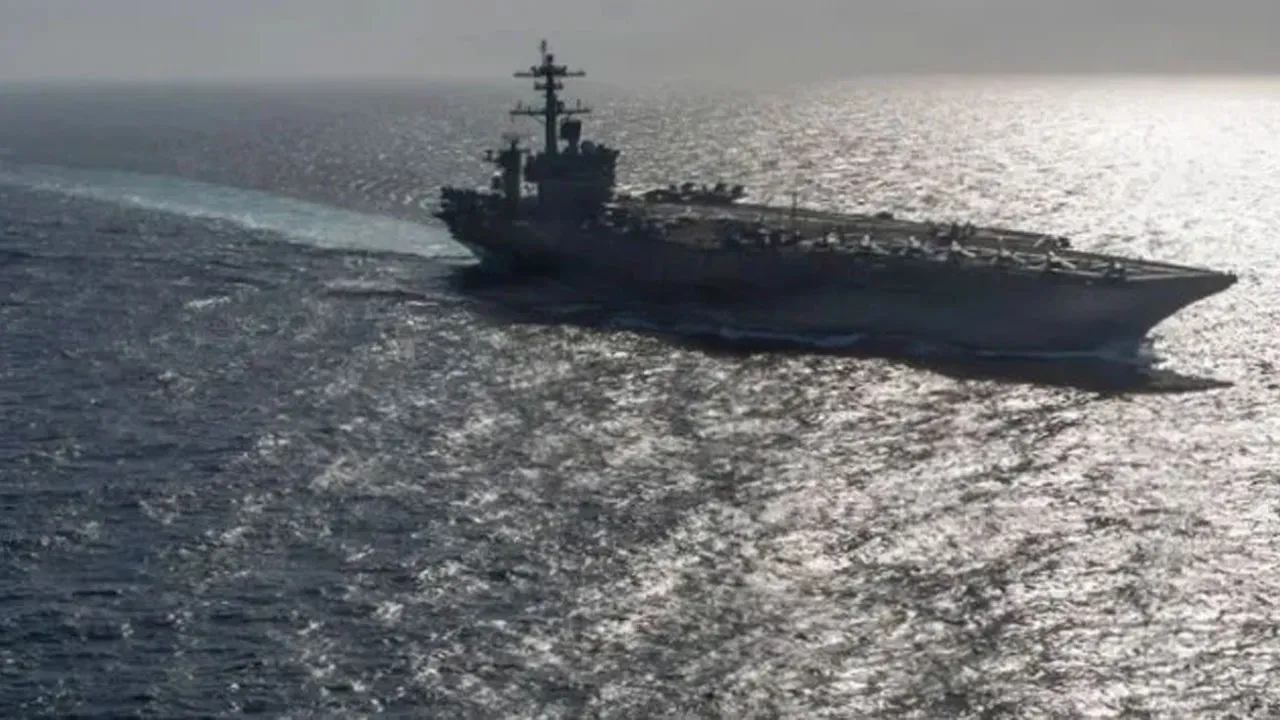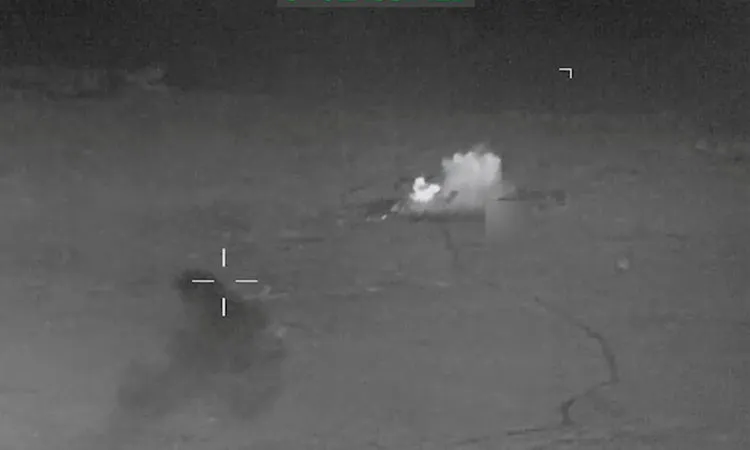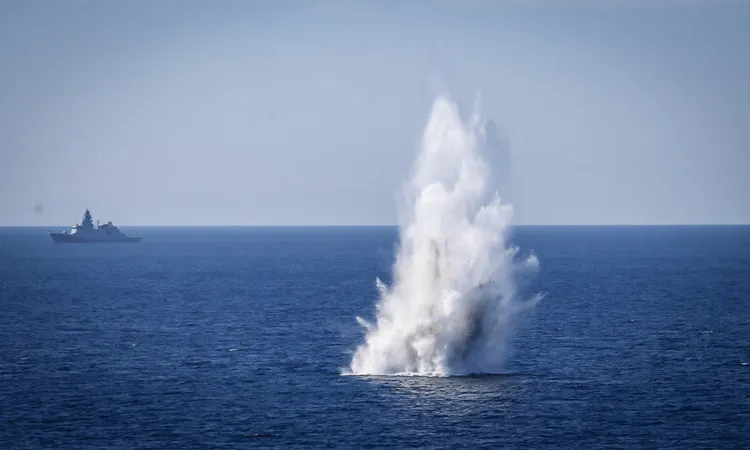
The United States military carried out fresh "self-defense" airstrikes in southern Iran on Monday, targeting missile launch sites and naval boats allegedly attempting to lay mines. The escalation comes at a hyper-critical juncture, occurring simultaneously as high-level diplomatic delegations convene in Doha, Qatar, to negotiate an end to the three-month-old war.
According to U.S. Central Command (CENTCOM), the operations near the strategic port city of Bandar Abbas, as well as coastal areas near Sirik and Jask, were executed to counter imminent threats to American personnel.

"U.S. forces conducted self-defense strikes in southern Iran today to protect our troops from threats posed by Iranian forces," stated CENTCOM spokesperson Captain Tim Hawkins. He emphasized that the military continues to exercise "restraint" to maintain a fragile ceasefire that has technically been observed since April 8.
While Tehran has not issued an official state response to the strikes, local Iranian media reported heavy explosions across the Gulf coast. Tabnak, a news outlet closely affiliated with former Revolutionary Guard leadership, reported that four Islamic Revolutionary Guard Corps (IRGC) troops were killed during the American operations targeting the boats. Separately, Iranian state media claimed their newly deployed air defense systems successfully downed a "hostile" stealth drone over the Persian Gulf.
The Doha Diplomatic High-Wire Act
The military friction directly shadows intensive mediation efforts in Qatar. Iran’s foreign minister and top negotiators are holding direct talks with Qatar’s prime minister on a proposed Memorandum of Understanding (MoU).
The draft agreement reportedly including a formal 60-day extension of the current ceasefire. The immediate reopening of the Strait of Hormuz to stabilize crippled global energy markets and a structured framework for future negotiations regarding Iran's highly enriched uranium stockpile.
The stakes are extraordinarily high for global markets. The conflict, which erupted following wide-ranging U.S. and Israeli strikes on February 28, led to Iran effectively choking off the Strait of Hormuz—a maritime gateway responsible for one-fifth of the world's crude oil and natural gas consumption.
Conflicting Signals from Washington and Tehran
U.S. President Donald Trump took to Truth Social on Monday to announce that negotiations were moving along "nicely," but paired the optimism with strict conditions. He warned that any final arrangement "will only be a Great Deal for all, or no Deal at all."
Trump specified that Iran's estimated 440 kilograms of 60% enriched uranium must either be turned over to the U.S. or immediately destroyed in coordination with Tehran.
U.S. Secretary of State Marco Rubio, speaking from New Delhi, noted that while a deal is still viable, final text alignments could take several days. "We'll see if we can make progress," Rubio remarked, reaffirming that Washington wants to exhaust every diplomatic avenue before considering alternative measures.
However, Iranian Foreign Ministry spokesperson Esmaeil Baghaei explicitly downplayed assertions of an immediate breakthrough. While confirming consensus on a "large portion" of structural points, Baghaei stressed that "to say that this means the signing of an agreement is imminent—no one can make such a claim." He added that comprehensive nuclear parameters would only be addressed after a solid framework accord is fully locked in.
Complicating Factors in the Region
Compounding the diplomatic lag are reported communication friction points within Iran's leadership structure. Western intelligence assessments suggest that Iran's Supreme Leader, Mojtaba Khamenei—who assumed power following the death of his predecessor in an Israeli strike on the war's opening day—is operating from an undisclosed location due to injuries, slowing the authorization chain for Iranian envoys.
Meanwhile, tensions continue to reverberate across neighboring fronts. Israeli Prime Minister Benjamin Netanyahu announced Monday that Israel will intensify its military campaign against the Hezbollah militia in Lebanon's eastern Bekaa Valley, arguing that continuous self-defense measures are necessary despite a separate mid-April truce agreement.