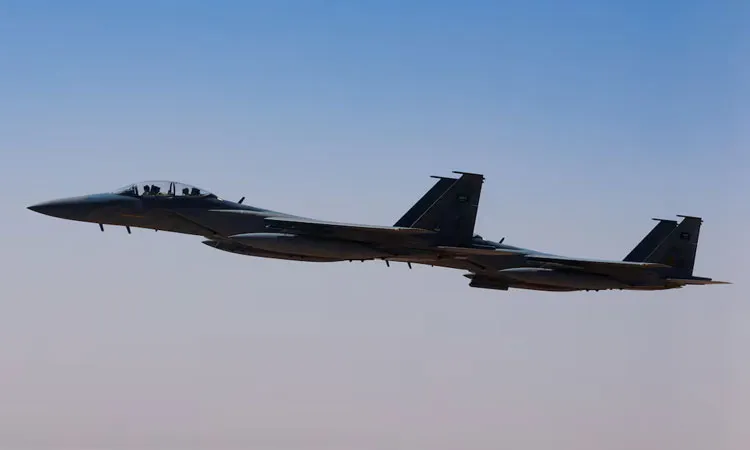
Saudi Arabia launched a series of unpublicized air strikes directly on Iranian soil in late March, marking a major shift in the kingdom’s defense strategy. According to Western and Iranian officials, the covert operation was a direct retaliation for Iranian attacks on Saudi territory during the recent 10-week regional war.
While the specific targets remain unconfirmed, the strikes represent the first time the Saudi Air Force has publicly surfaced as having directly struck Iran. Traditionally reliant on the U.S. military "umbrella," Riyadh appears to have acted independently after weeks of missile and drone barrages pierced its defenses.
The strikes were not intended to start a full-scale war, but rather to force a "tit-for-tat" equilibrium. Sources indicate that Saudi Arabia notified Tehran of the strikes, followed by a period of intense diplomacy and threats of further action. This pressure reportedly led to an informal de-escalation agreement in early April, just days before the broader U.S.-Iran ceasefire on April 7.
"It shows a pragmatic recognition that uncontrolled escalation carries unacceptable costs," said Ali Vaez of the International Crisis Group.
While the UAE has taken a publicly hawkish stance against Iran, Saudi Arabia has maintained a dual-track approach: military retaliation coupled with high-level diplomatic channels. Despite the 2023 China-brokered détente, the two powers remain at odds, though both now seem eager to avoid a "furnace of destruction," as noted by former Saudi intelligence chief Prince Turki al-Faisal.
The cooling of tensions is evident in the data. Drone and missile attacks on Saudi Arabia plummeted from over 105 in late March to roughly 25 in the first week of April.