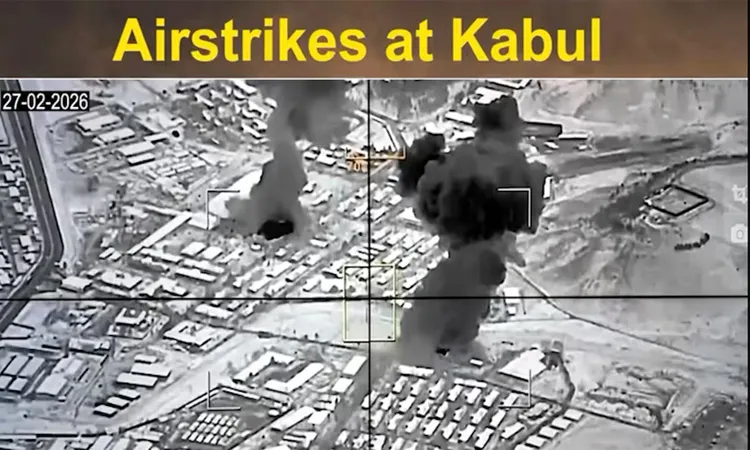
Pakistan carried out air strikes on Kabul and two other Afghan provinces on Friday, sharply escalating tensions with Afghanistan after Taliban forces announced a major offensive near the border a day earlier.
According to Pakistani officials, the strikes targeted locations in Kabul as well as Kandahar and Paktia. Casualty figures remain unclear, and claims from both sides could not be independently verified.

Pakistan’s Defence Minister Khawaja Asif declared the situation an “open war,” saying Islamabad’s patience had run out with the Afghan Taliban, whom Pakistan accuses of backing militants involved in recent attacks inside the country. Prime Minister Shehbaz Sharif also praised the military action, saying Pakistan would respond decisively to threats.

The Afghan Taliban said the strikes were met with retaliatory attacks on Pakistani military positions. Taliban spokesperson Zabihullah Mujahid claimed their forces carried out counter-operations, including drone strikes, a claim Pakistan denied. Pakistan’s Information Minister Attaullah Tarar said all drones were intercepted and no casualties occurred.

Afghan state media reported civilian casualties in Paktika, including women and children, following Pakistani air strikes. Pakistan has not confirmed these reports.
The escalation has triggered international concern. The United Nations, China, Iran, Turkey and Saudi Arabia have all urged restraint and dialogue. Iran has offered to mediate between the two sides.
Analysts say the strikes mark a serious deterioration in relations between Islamabad and Kabul, already strained since the Taliban returned to power in 2021.
While Pakistan has superior conventional military power, experts warn that prolonged conflict could destabilise the wider region and worsen humanitarian conditions in Afghanistan.