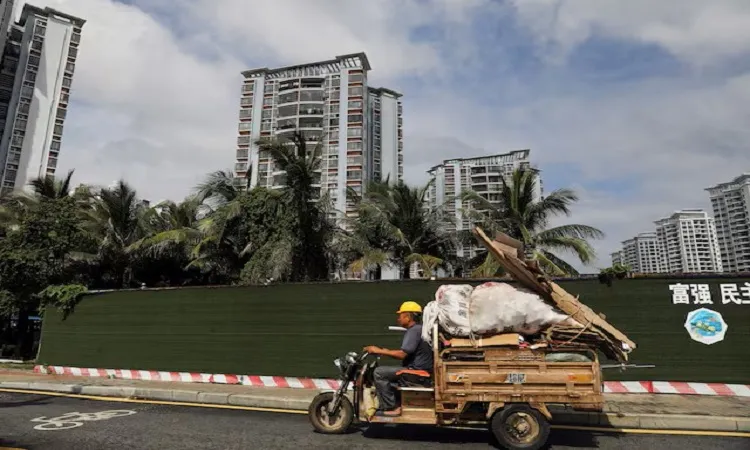
In a strategic move to counter declining foreign investment and global trade tensions, China has officially launched a massive free-trade experiment on Hainan Island. On Thursday, the southern province comparable in size to Belgium was effectively split from the mainland for customs purposes to create a duty-free commercial hub modeled after Hong Kong.
The project aims to turn Hainan into a "Free Trade Port." Goods that achieve at least 30% local value-added can enter the mainland market tariff-free. Additionally, the island will allow foreign firms to operate in service sectors that remain restricted elsewhere in China.
Vice Premier He Lifeng described the port as a vital gateway for China’s "new era of opening up." The move is seen as a response to U.S. tariffs and an attempt to diversify China’s $19 trillion economy while consolidating its role in global supply chains.
By piloting high-standard trade openness in Hainan, Beijing hopes to convince members of the CPTPP (Comprehensive and Progressive Agreement for Trans-Pacific Partnership) that it can meet the bloc’s strict investment requirements.
Despite its $113 billion GDP, Hainan faces steep hurdles. Analysts note it lacks the legal and financial openness of Hong Kong and must compete with established hubs in Japan and Southeast Asia. Furthermore, Western diplomats remain skeptical about whether a regional pilot program is enough to satisfy the nationwide requirements for major international trade deals.