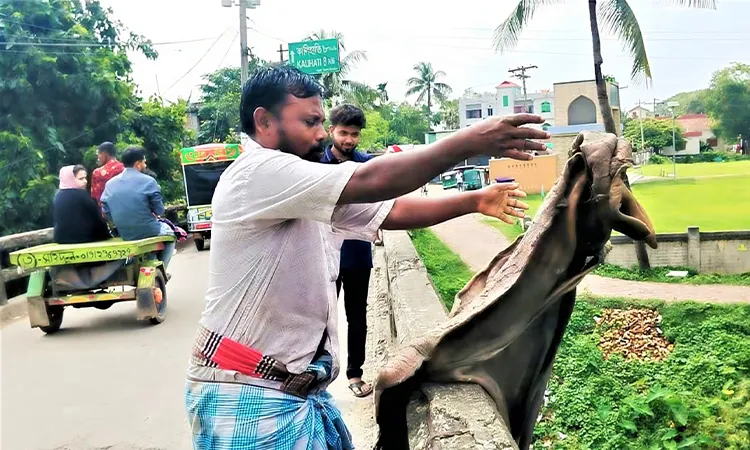
Skyrocketing preservation costs, cash crunches, and a complete absence of field-level market monitoring have triggered a massive collapse in the raw hide market across Tangail. Out of sheer frustration and mounting financial losses, seasonal traders are throwing unsold animal skins into local rivers.
On Friday afternoon, Rahej Ali, a seasonal trader in the Balla industrial area of Kalihati Upazila, was seen dumping multiple cow hides into the Langulia River from the Balla Bridge.
"I collected these skins from door to door across remote hilly and char areas, hoping to make a small profit," a frustrated Ali said. "But no wholesaler showed up. With the high cost of salt and labor, I couldn't afford to preserve them myself. I lost my entire capital of Taka 40,000 to 50,000."
A similar crisis has gripped Pakutia Hat in Ghatail Upazila, the district’s largest traditional leather trading hub. While the market usually sees transactions worth crores of Taka following Eid-ul-Adha, Sunday’s (May 31) market presented a bleak picture. Supply vastly outnumbered buyers, and wholesalers refused to offer even half of the government-set rates.
Local traders point out that the Ministry of Commerce's fixed rates apply strictly to salted hides, leaving raw, untreated hides vulnerable to exploitation by local syndicates.
Furthermore, structural bottlenecks continue to choke the leather supply chain:
Unpaid Dues: Tanneries in Savar owe crores of Taka to regional wholesalers, leaving local buyers without the cash liquidity needed to purchase hides from seasonal traders.
Rising Input Costs: The cost of salt, labor, and transport has nearly doubled, making immediate chemical preservation financially unfeasible for small-scale operations.
Global Pressures: A strong presence of alternative products in international markets, heavily dominated by Chinese syndicates, has lowered export margins for Bangladeshi leather.
Industry insiders emphasize that the sector—the country’s second-largest foreign exchange earner—faces an existential threat unless modern intervention is introduced. Experts urge the government to establish temporary climate-controlled cold storage facilities near major hubs like Pakutia and introduce low-interest bank loans for traders prior to Eid.
While Kalihati Upazila Nirbahi Officer (UNO) Md. Khairul Islam stated that the local administration distributed free salt to help traders preserve their stock, he acknowledged that the supply was insufficient to cover everyone.