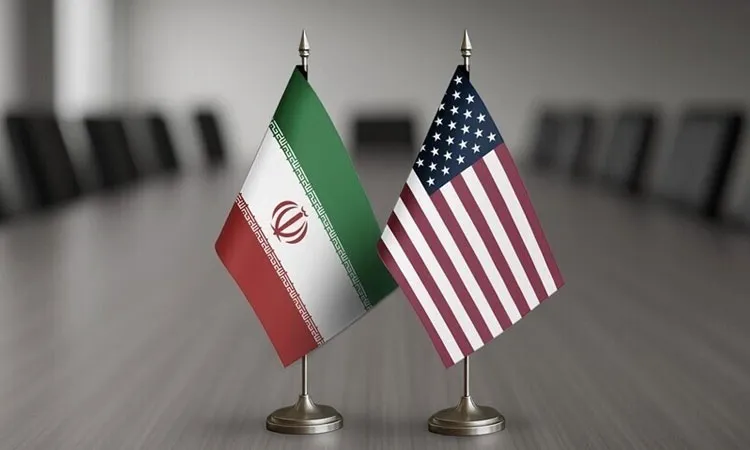
US President Donald Trump has sparked intense diplomatic friction by declaring that any final peace agreement with Iran must be tied to a mass expansion of the Abraham Accords.
In a statement posted on his Truth Social platform on Monday, Trump revealed that he is "mandatorily requesting" six key Muslim-majority nations like Saudi Arabia, Qatar, Pakistan, Turkey, Egypt and Jordan to simultaneously sign the US-brokered accords to normalize relations with Israel. Pakistan has already firmly rejected the demand.
Trump indicated that while back-channel negotiations to resolve the recent armed conflict with Iran are "proceeding nicely," he intends to use the diplomacy as leverage for a wider Middle East realignment.
"After all the work done by the United States to try and pull this very complex puzzle together, it should be mandatory that all of these countries sign onto the Abraham Accords," Trump wrote. He urged Saudi Arabia and Qatar to sign "immediately," adding that if a comprehensive settlement is reached, it would be an honor to eventually have Iran join the coalition as well.
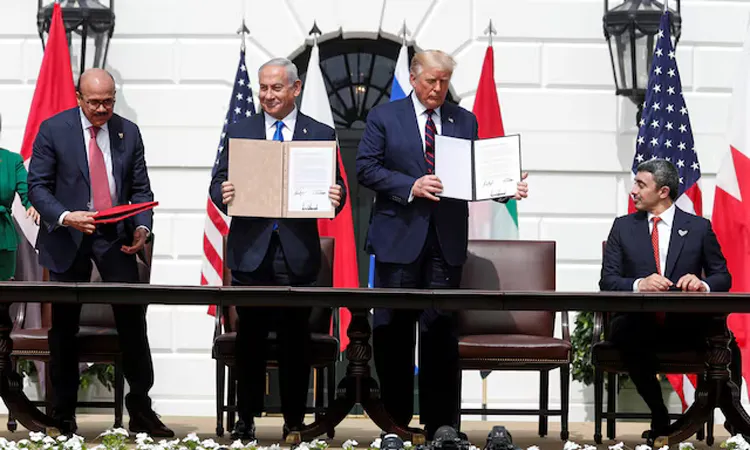
The Abraham Accords, originally brokered during Trump’s first term in 2020, established diplomatic ties between Israel and several Arab nations including the UAE, Bahrain, Morocco and Sudan.
The mandate has met severe skepticism due to deep-seated public anger across the Muslim world regarding the scale of Israel's military offensive in Gaza. Analysts argue that linking the two issues creates a massive hurdle for the fragile, Pakistan-mediated US-Iran ceasefire.
Pakistan's Rejection: A Pakistani official source familiar with the matter confirmed that Islamabad immediately rejected the proposal, stating the two issues are entirely separate. "Pakistan is under no compulsion to adhere to any such demand," the source emphasized.
Saudi Arabia's Stance: Riyadh has long maintained that it will not normalize relations with Israel without a clear, internationally recognized roadmap to Palestinian statehood.
Existing Treaties: While Egypt, Jordan, and Turkey already hold formal diplomatic ties with Israel, their bilateral relations have been severely strained by the ongoing Gaza war.
Ali Vaez, Iran Project Director at the International Crisis Group, described Trump's strategy as highly unrealistic. "Trump is trying to sell an Iran deal as an Abraham Accords sequel," Vaez noted. "But he is trading one fantasy for another pretending a fragile deal can anchor a new Middle East order."
Israeli Prime Minister Benjamin Netanyahu's office has not yet issued a public comment on Trump's declaration.