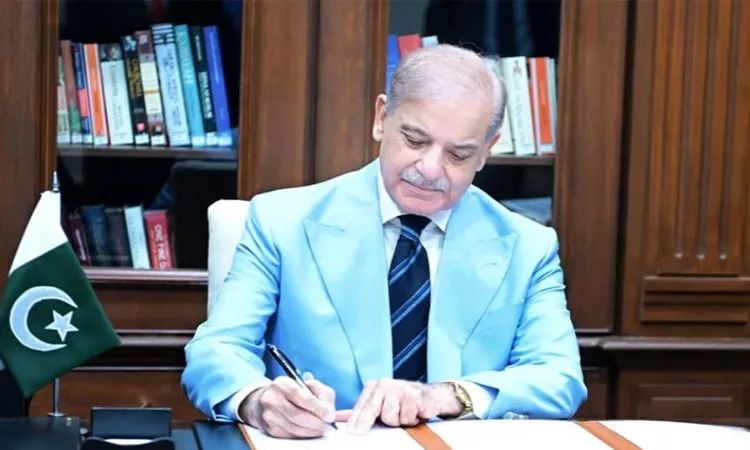
After decades of conflict, sanctions, and military tension, the United States and Iran have agreed to a permanent cessation of military operations. Announced by Pakistani Prime Minister Shahbaz Sharif, this electronically signed agreement between Tehran and Washington marks the region’s most significant diplomatic breakthrough in decades. It offers a rare chance for diplomacy to resolve a long-standing dispute.
However, optimism must be tempered with caution. The gap between announcing and implementing a peace deal is notoriously risky. Vested interests often try to derail diplomatic progress through provocation or political sabotage.
Already, Israel has stated it will not be bound by the US-Iran agreement. This defiance, despite US President Donald Trump’s warnings against actions in Lebanon, underscores the fragility of the current peace.
Regional powers must recognize that this agreement's impact extends far beyond US-Iran bilateral relations. For decades, the Middle East has lacked an inclusive security framework to resolve disputes, rebuild trust, and prevent crises from escalating into armed conflict.
While temporary pacts reduce immediate tensions, long-term stability demands institutional structures and mutual cooperation. Here, Pakistan’s role in mediating the US-Iran hostility is highly significant.
Successful mediation relies on the mediator's credibility. Pakistan has proven to be a reliable partner by balancing relations with both nations. It shares deep geographical, historical, and cultural ties with Iran, while maintaining a long-standing, constructive relationship with the United States. Earning the trust of both Tehran and Washington is a difficult feat, but Pakistan achieved it.
This breakthrough required more than just acceptability; it demanded exhausting, behind-the-scenes effort. Success stemmed from persistent dialogue and subtle diplomacy rather than dramatic public gestures. Pakistan served as an honest broker and actively helped clear obstacles for both sides—a display of diplomatic professionalism recognized by both nations.
If this agreement endures—particularly with the release of Iran’s frozen assets and the lifting of sanctions—it will prove that quiet, patient diplomacy triumphs over public rhetoric.
However, Pakistan’s role should not stop here. Islamabad could propose a broader framework to resolve regional inter-state disputes. The Middle East and the wider Muslim world need an integrated approach beyond mere crisis management. Pakistan is well-positioned to facilitate dialogue among Saudi Arabia, Iran, Turkey, Egypt, and the Gulf states to build a regional security architecture. This framework should focus on crisis resolution, economic cooperation, maritime security, and counter-terrorism, rather than acting as a formal military alliance.
The US-Iran agreement also offers a valuable lesson for South Asia. Given the current political climate, it would be unconventional, yet statesmanlike, for Indian Prime Minister Narendra Modi to acknowledge Prime Minister Shahbaz Sharif’s role in this peace deal. Such a gesture would project confidence rather than compromise India’s interests.
As nuclear-armed neighbors, India and Pakistan have inextricably linked futures. Despite deep divisions, neither side should ignore opportunities to de-escalate. Recognizing constructive diplomacy could help break the ice and open a new path for bilateral cooperation.
Ultimately, this agreement is not the end of a process, but the beginning of a larger journey. To turn this diplomatic success into lasting peace, all parties must maintain their political commitment and remain vigilant against spoilers. Opportunities to rewrite history are rare. The region must seize this moment.
Asif Durrani is a former Pakistani ambassador to Iran and the United Arab Emirates (UAE), and served as Pakistan’s special representative for Afghanistan. He is currently a Senior Research Fellow at the Islamabad Policy Research Institute (IPRI).