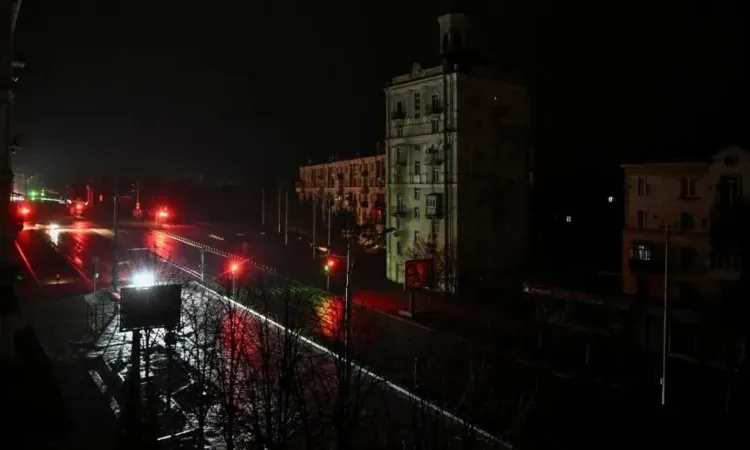
More than one million people in southeastern Ukraine were left without heating and water after intensified Russian air strikes targeted the region's energy infrastructure during a severe winter cold snap.
Officials reported significant damage across the Dnipropetrovsk and Zaporizhzhia regions. Critical facilities, including hospitals and water stations, were forced to switch to backup generators. Energy officials have urged residents to drastically limit electricity use to prevent a total grid collapse.
The strikes come as Russia ramps up its campaign against Ukraine's power supply. Maxim Timchenko, CEO of DTEK—Ukraine’s largest private energy provider—described the situation as a "permanent crisis."
"The strikes are so frequent that we simply don't have time to recover," Timchenko said, noting that his company, which serves 5.6 million people, is struggling to repair the grid amidst constant waves of drones and missiles.
President Volodymyr Zelensky condemned the attacks as "mockery" of the civilian population. Despite the humanitarian crisis, Zelensky expressed cautious optimism that the full-scale war could end by the first half of 2026.
Zelensky’s recent diplomatic efforts included meetings in Paris with high-level U.S. envoys Steve Witkoff and Jared Kushner. While the UK and France have signaled a willingness to deploy troops to monitor a future peace deal, Zelensky noted that firm security guarantees remain elusive.
Negotiations, led largely by efforts from the Trump administration, are currently centered on the final "10%" of a potential deal. Current proposals and discussions regarding areas in eastern Ukraine not currently under Russian control. The role of the EU and Western allies in a post-conflict settlement.
Ukraine has yet to formally agree to ceding territory, while Russian President Vladimir Putin continues to demand the full annexation of the Donbas region. As a "new massive strike" looms amid heavy snow and frost, the urgency for air defense support remains Ukraine's top priority.