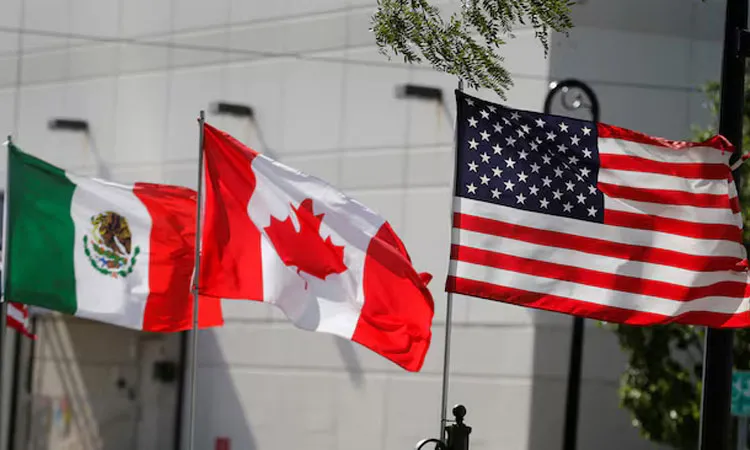
The Trump administration has officially declined to extend the U.S.-Mexico-Canada Agreement (USMCA), triggering a 10-year expiration countdown for the $1.6 trillion trilateral trade pact. The decision follows a mandated six-year review and forces annual renegotiations to keep the agreement alive.
U.S. Trade Representative Jamieson Greer stated the refusal aims to address growing trade deficits and reshore American manufacturing jobs. "The USMCA is not renewed in its current form," Greer confirmed. The U.S. plans to pursue major revisions during bilateral talks with Mexico in late July, focusing heavily on demanding that North American-built vehicles contain 50% U.S.-made parts.
The decision injects fresh uncertainty into a deeply integrated North American economy. Mexican Economy Minister Marcelo Ebrard emphasized a desire to resolve disputes and minimize economic instability, while President Claudia Sheinbaum reassured the public that joint negotiations will continue over the coming decade. In Canada, Minister Dominic LeBlanc stressed the urgent need to address severe new U.S. tariffs including 25% on autos and 50% on metals recently imposed by President Donald Trump.
Automotive industry leaders warn the U.S. strategy could backfire. Nissan CEO Ivan Espinosa cautioned that forcing higher U.S. manufacturing content will disrupt established supply chains and worsen vehicle affordability for consumers.
While the free trade zone remains active for now, the U.S. administration’s aggressive tariff policies and demand for strict new protocols signal a volatile path ahead for North American trade.