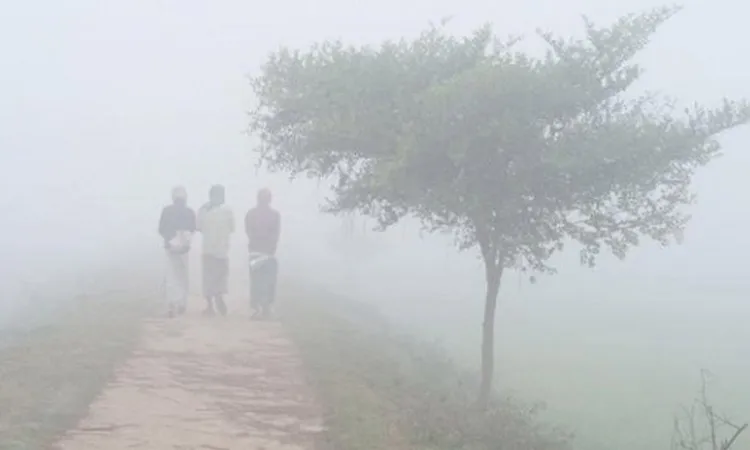
The Ishwardi Meteorological Office in Pabna recorded a minimum temperature of 8.5 degrees Celsius on January 6. Helal Uddin, in-charge of the Ishwardi Meteorological Office, confirmed this information.
The temperature is dropping every day in the northern district of Pabna. Disaster has descended on public life. The suffering of low and middle-income people is endless. The number of children and elderly patients with cold-related diseases in hospitals is increasing every day.
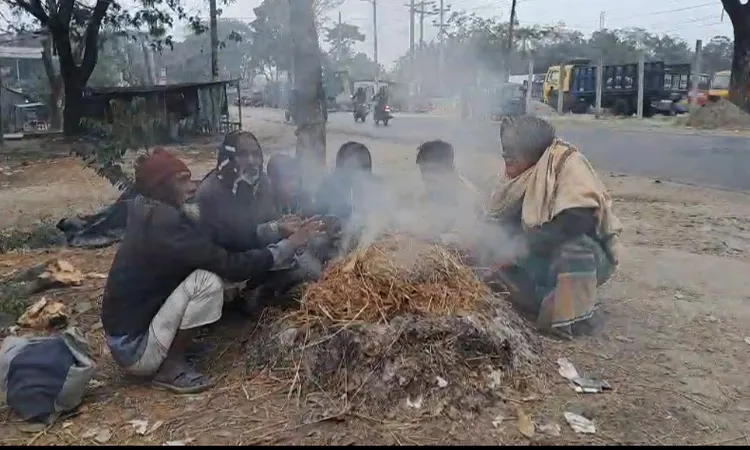
Daily wage workers are not getting work due to the severe cold. To ward off the cold, low and middle-income people are crowding the old cloth hawkers' markets to buy warm clothes. Some are trying to get some warmth by lighting a fire in the courtyards or shops. A mild cold wave is blowing.
Although there has been no dense fog or severe fog since the morning, the conditions are unbearable in the cold due to the cold wind. The 250-bed Pabna General Hospital was visited in the morning. The number of children and elderly patients is increasing. Due to the lack of sufficient beds, children and the elderly are being treated on the floor.
Although there are 38 beds in the children's ward, most of the beds are broken. Three children are being treated in a bed with a pair of claps. About 150 patients have been admitted to the children's ward and are being treated. The amount of winter clothes being distributed by the district administration and private organizations is completely inadequate.
The affected population demands that sufficient amount of winter clothes be distributed at the government and private levels. As soon as the day breaks, warm clothes shops in the hawkers' markets start opening. Low and middle-income people are busy buying warm clothes from these shops until late at night. Meanwhile, farmers have started harvesting mustard. They are preparing land for irrigated land as well as jute and corn cultivation.
Farmers are somewhat disappointed due to the lack of daily laborers due to the excessive cold and cold wave. Doctors are advising people not to leave their homes unnecessarily. Along with wearing warm clothes to protect yourself from the cold.